Lamborghini Active Aero Patent 2026: Moving Roof Flap and Adjustable Rear Wing Explained
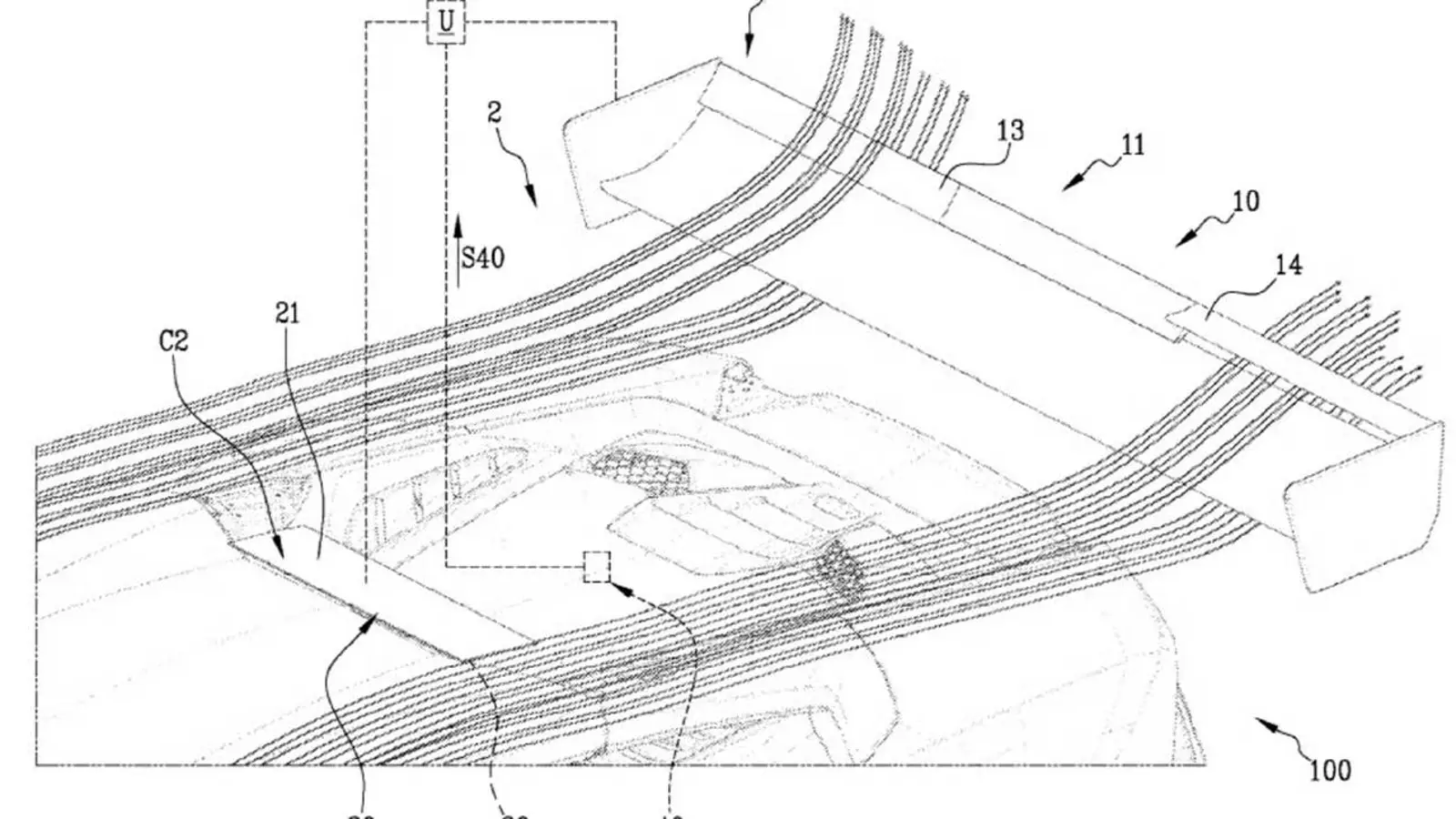 © uspto.gov
A new Lamborghini patent describes a moving roof flap paired with an adjustable rear wing, with a shape-memory alloy variant that changes form under airflow.
Author: Nikita Novikov
Lamborghini is once again digging into what actually matters above 200 km/h more than a single horsepower figure: air control. A new patent describes active aerodynamics with several moving elements, where a roof-mounted piece changes the airflow feeding the rear wing. This isn’t just “the wing goes up, the wing goes down” anymore — it’s an attempt to make different zones of the body work as one connected system.
Under Lamborghini’s scheme, a pivoting flap on the roof can redirect air toward the rear wing, while the wing itself gets several adjustable sections. The filing specifically covers elements placed one in front of the other: the first piece alters the airflow, the second works with air that’s already been shaped. The goal is more precise control over downforce and aerodynamic drag.
There are more unusual variants too. The roof element could double as engine cooling or underbody thermal management, and part of the surface is proposed in a shape-memory alloy: under airflow load or temperature, it could deform and change the aerodynamic effect. In corners, the system could theoretically generate different downforce levels on each side of the car, helping it hold its line better.
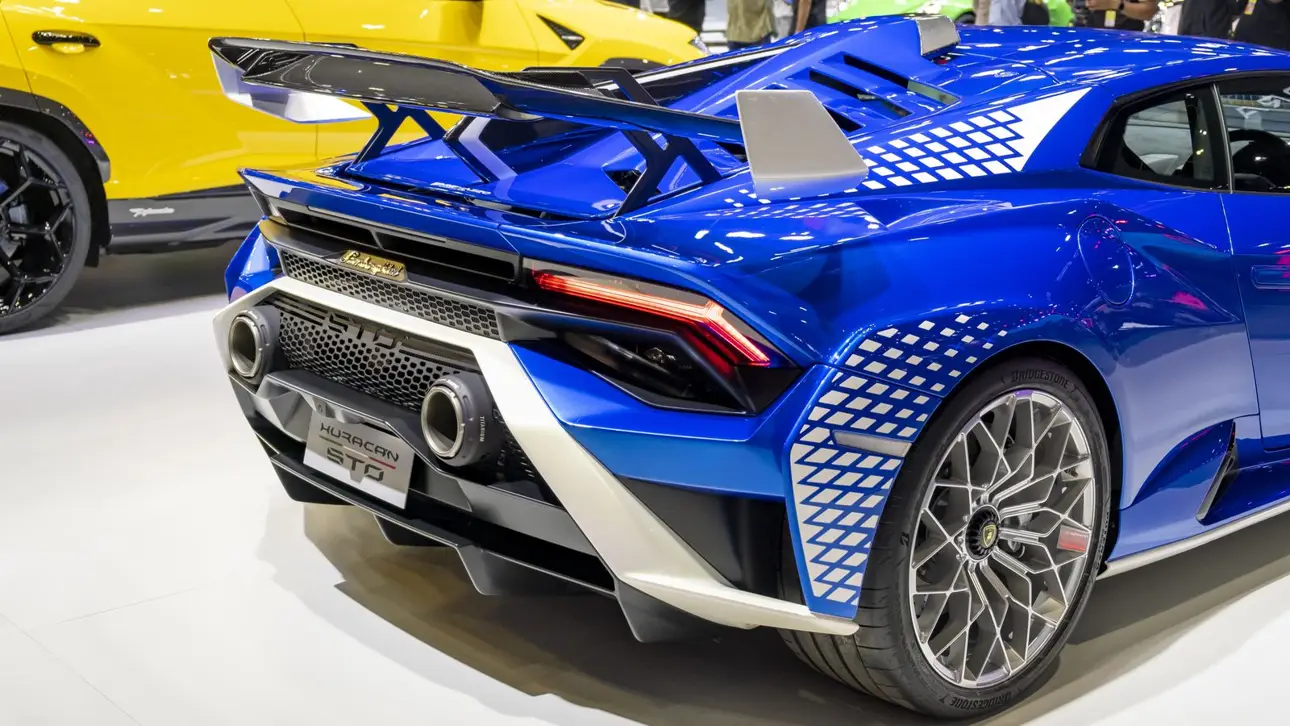
Lamborghini already had a foundation for ideas like this. The Huracan Performante used the ALA system with active flaps that redistributed downforce, including side-to-side adjustments in corners. The company later patented other solutions too, including active elements in the wheels for brake cooling. The new patent looks like a logical continuation: while Ferrari, Porsche, McLaren and Mercedes-AMG push hybrid powertrains and lightweight materials, Lamborghini is trying to preserve its signature aggression through aerodynamics. This tech could theoretically land on the Revuelto first.
It’s worth not confusing a patent with a finished production option. Filings like this often protect an engineering idea without guaranteeing the technology will show up on the next model. But the direction is clear: future supercars will get faster not just from horsepower, but from the ability to change shape for a specific mode — acceleration, braking, cornering, cooling.
Lamborghini still sells emotion, but increasingly that emotion starts not with the engine, but with the air the car has already learned to command before it even enters a corner.
This English edition was prepared using AI translation under editorial oversight by SpeedMe. The original reporting is by Nikita Novikov
Latest Stories