LARTE Design BMW X5M Competition carbon body kit: parts, TÜV and 6-hour install
 © LARTE Design
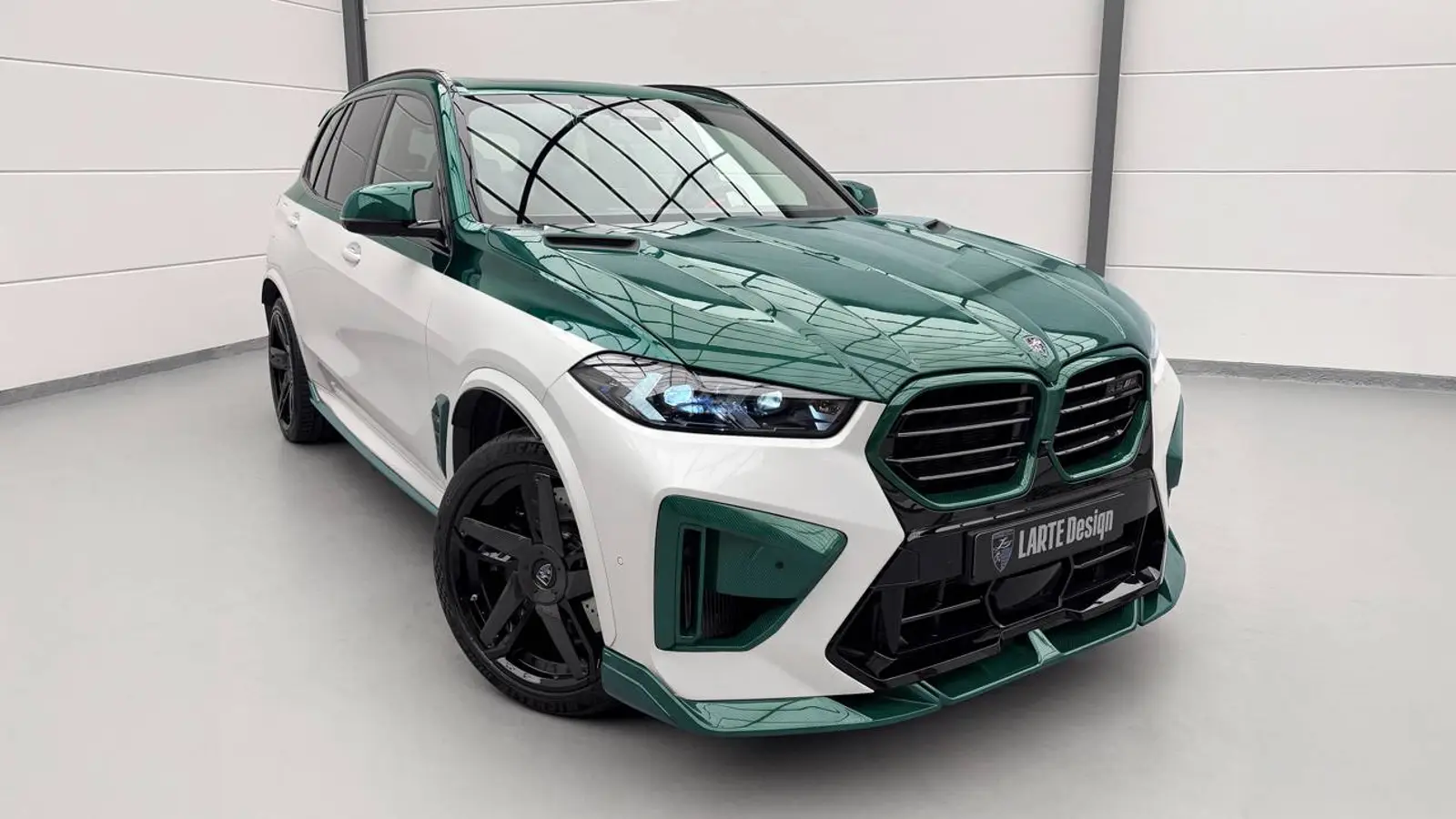
LARTE Design’s dry-carbon widebody kit for the BMW X5M Competition bundles 13 parts in a Vancouver Green weave, bolts to stock points in about 6 hours and is TÜV-certified.
Author: Nikita Novikov
LARTE Design has shown more than just another body kit for the BMW X5M Competition — it is an attempt to push the tuning of a pricey SUV beyond the factory configurator. The body stays white, while the widebody kit is made from 100% dry carbon in a Vancouver Green shade — here the colour is woven into the structure of the material rather than sprayed onto a finished part with paint or film.
The kit comprises 13 elements: front bumper, hood, arch extensions, side skirts, rear diffuser, spoiler and other parts. LARTE’s idea is for the effect to be architectural rather than decorative: the X5M visually sits lower, looks wider and more compact, without the sense of separately bolted-on pieces. Against the white body, the green carbon accentuates the edges and makes the silhouette more cohesive.
The process starts with a clay model fitted to the actual car at LARTE’s atelier in Erkrath, Germany. Then come 3D scanning, prototyping, dry-carbon prepreg layup and autoclave curing under controlled temperature and pressure. This approach is closer to how major carmakers produce exposed carbon parts than to classic bolt-on tuning.
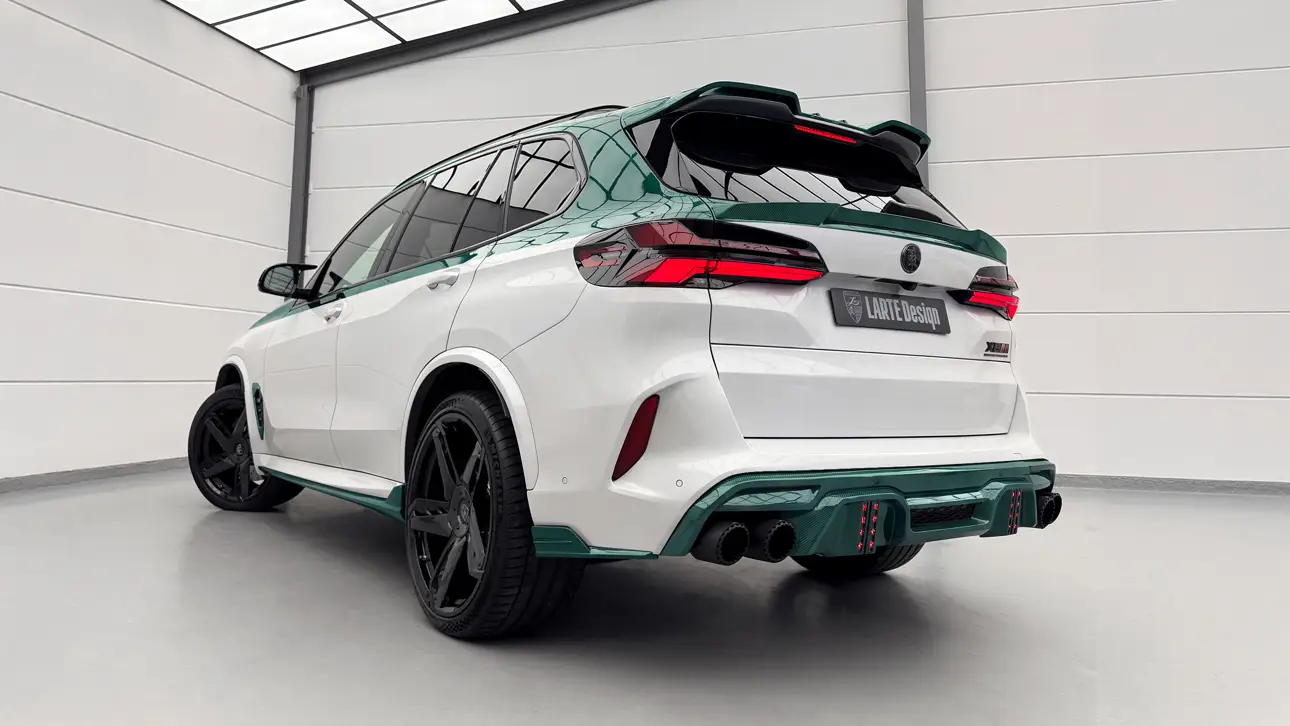
The practical side matters too. The kit mounts on factory fixings, without drilling the body and without structural changes, in roughly 6 hours. LARTE claims compatibility with the X5M Competition’s sensors and driver assistance systems, as well as no impact on the factory warranty. The parts are TÜV-certified, and the hood additionally carries Teilegutachten approval. Production takes 10 to 18 days depending on the model generation.
For BMW X5M owners this is a costly alternative to factory Individual colours and M Performance accessories. Mansory and Brabus often bet on aggression and a recognisable tuner signature; LARTE’s emphasis here is different: colour, material and geometry are assembled around a specific client. A kit like this appeals to a narrow circle of X5M, X6M, XM and X7 owners, but there is a catch: how much such work adds at resale depends not only on quality but on the taste of the next buyer.
Dry carbon has one strong argument — it never looks like a temporary fix. But the more individual a car is made, the less universal it becomes on the used market.
This English edition was prepared using AI translation under editorial oversight by SpeedMe. The original reporting is by Nikita Novikov
Latest Stories