Hyundai Bayon 2027: hybrid engine, boot space and specifications
 © hyundai.news
The new Hyundai Bayon is larger, offers 440 litres of boot space with petrol power, and adds a 138 hp 1.6 GDI hybrid in 2027 with a smaller 397-litre boot.
Author: Nikita Novikov
Hyundai unveiled the new generation of its compact Bayon crossover at the Paris Motor Show on 12 October. The car is 65 mm longer and 35 mm wider, with a roomier cabin and a revised engine range. One detail stands out: the upcoming hybrid will have 43 litres less boot space than the regular petrol version.
According to Hyundai's preliminary official specifications, the new Bayon measures 4245 mm long, 1810 mm wide and has a 2600 mm wheelbase. Its predecessor measured 4180, 1775 and 2580 mm respectively. The extra distance between the axles has created more rear-seat legroom.
The petrol Bayon offers a 440-litre boot, up from 411 litres previously. That is a gain of 29 litres, or about 7%. Hyundai lists only 397 litres for the HEV, which is 14 litres less than the petrol Bayon of the previous generation. The difference between the two new versions is 43 litres.
At the start of European sales, two 1.0 T-GDI turbo engines will be offered with 90 and 115 hp. Both can be paired with a six-speed manual or a seven-speed DCT. Front-wheel drive is standard across the range.
A full hybrid is due in 2027. Its powertrain combines a 1.6 GDI engine, an electric motor and a six-speed DCT, with a preliminary combined output of 138 hp. Hyundai also lists adaptive regenerative braking with paddle-adjustable intensity. The target CO2 figure is 102–113 g/km, although final values remain subject to certification.
During testing of the new Bayon, a 48-volt mild-hybrid system had been discussed as a possibility. Hyundai's published range now lists the 1.0 T-GDI petrol engines and the forthcoming full HEV, while a separate MHEV version has not been announced.
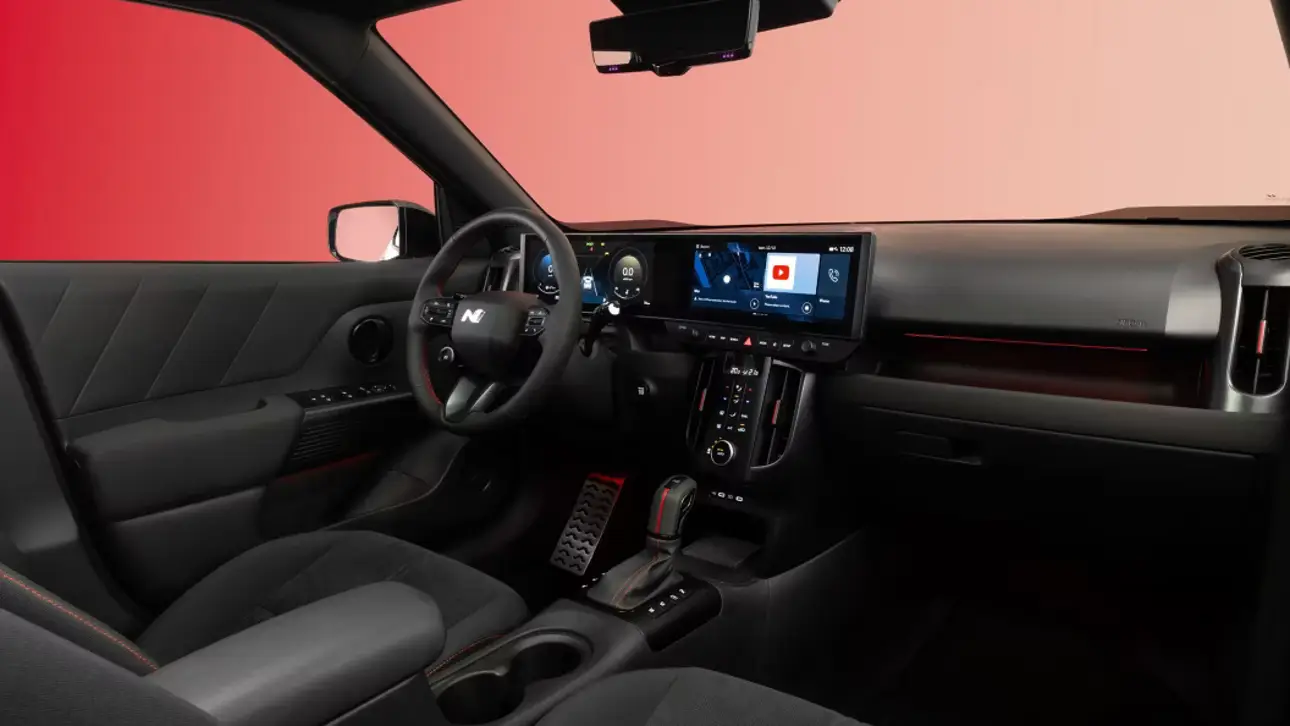
Depending on trim, the cabin can feature two curved 12.3-inch displays. Equipment also includes Hyundai Digital Key 2, wireless Apple CarPlay and Android Auto, ventilated front seats, heated rear seats, adjustable rear backrests, a panoramic roof and a Bose audio system. Safety technology includes Highway Driving Assist 2, a surround-view monitor and rear cross-traffic collision avoidance.
The N Line version gets dedicated 18-inch wheels, a black roof and sportier trim. Hyundai has not announced a separate higher-output engine for it.
European Bayon production is based at Hyundai Motor Türkiye. Final prices have not yet been published, and Hyundai's German site states that the car is not yet on sale and is still being prepared for homologation. Some technical figures also remain preliminary. Price lists and final hybrid specifications will be the next major steps in the launch.
This English edition was prepared using AI translation under editorial oversight by SpeedMe. The original reporting is by Nikita Novikov
Latest Stories