Mercedes-Benz PLM.AI: €500 million investment and 17-month development target
 © media.mercedes-benz.com
Mercedes-Benz plans to use PLM.AI to streamline vehicle development and reduce physical tests, without eliminating crash testing.
Author: Polina Kotikova
Mercedes-Benz hopes its PLM.AI artificial intelligence system will eventually halve the number of physical tests required during vehicle development. It also aims to shorten the development cycle by up to 17 months. This does not mean AI will design cars alone or that real crash tests will disappear.
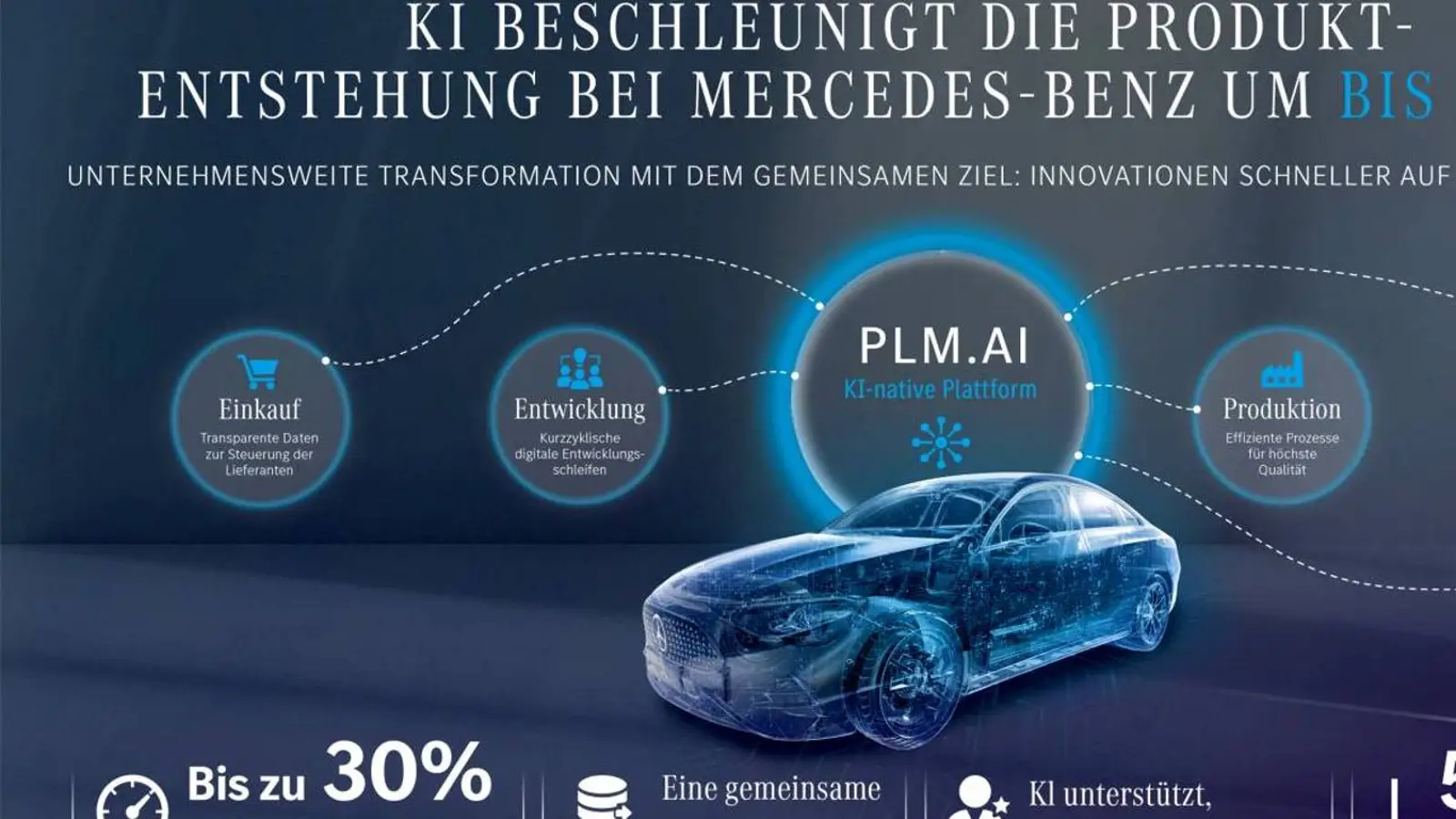
PLM.AI will connect engineering, purchasing, production, sales and aftersales activities in a common digital environment. Its purpose is to detect problems earlier, coordinate decisions and identify the most valuable tests before physical prototypes are built. Mercedes-Benz says engineers will retain responsibility for final decisions.
The company is investing around €500 million. It targets a reduction of roughly 17 months in vehicle development, process acceleration of up to 30% and efficiency gains of up to 50% in selected engineering tasks. These are objectives rather than independently verified results.
Weight reduction illustrates the concept. Altering a single component can affect cost, crash performance, equipment and manufacturing. Instead of sequential reviews, specialized AI agents could analyse these relationships together and suggest options that balance safety, quality and costs.
Digital simulation should also help determine which physical tests are necessary. Mercedes-Benz believes their number might ultimately fall by about half, but actual vehicles will still need testing. Euro NCAP protocols introduced in 2026 combine virtual simulations with full-scale crash tests and laboratory assessments, including protection of occupants of different ages and body types.
The aim is therefore to optimize Mercedes-Benz’s own development tests. AI may flag weak points earlier and eliminate less informative experiments. Independent vehicle safety assessment procedures remain in place; fewer internal tests do not mean abandoning safety validation.
CONTACT Software and Siemens supply the technological foundation. CONTACT Software provides the CONTACT Elements platform connecting engineering data and processes, while Siemens contributes design, simulation and digital validation tools, including digital twins. PLM.AI concerns vehicle development and manufacturing, not the software architecture controlling a finished car.
The platform forms part of Mercedes-Benz’s wider digital transformation. The company expects faster launches without relaxing quality and safety standards, but has not named the first models to complete the new development process or published independent confirmation of the projected time savings.
This English edition was prepared using AI translation under editorial oversight by SpeedMe. The original reporting is by Polina Kotikova
Latest Stories