Toyota turns the Fuji 24 Hours into a lab for its hydrogen GR Corolla
 © global.toyota
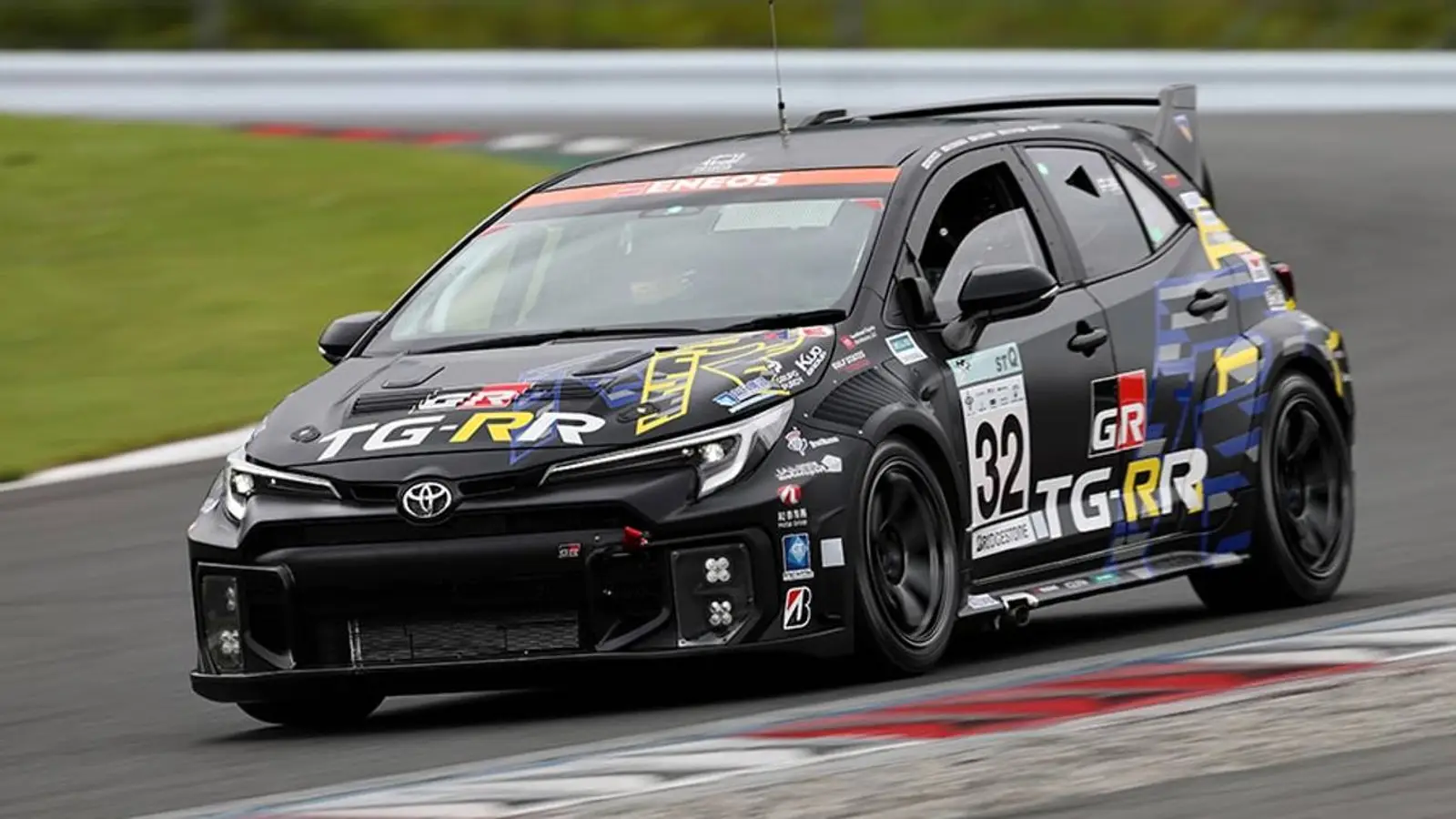
Toyota brings its liquid-hydrogen GR Corolla to the Fuji 24 Hours with a world-first superconducting fuel pump, a 300-litre tank and the DAT gearbox.
Author: Polina Kotikova
Toyota is once again using racing as a laboratory, not as a showcase. At the 24-hour Fuji Super Taikyu on 5–6 June, the liquid-hydrogen GR Corolla H2 concept will take to the grid — the world’s first race car equipped with a superconducting pump that feeds liquid hydrogen to the engine.
The GR Corolla H2 has already been through several stages of development: Toyota switched the car from gaseous to liquid hydrogen, refined combustion to chase both power and efficiency, learned to refuel the car quickly and safely, and pushed the pump to last under sustained full-throttle loads. Now the test is tougher: not a dyno, not a short sprint, but a proper 24-hour race.
The biggest change is hidden out of sight. In the hydrogen delivery system, the conventional electric motor driving the pump has been replaced by a superconducting one. Liquid hydrogen is stored at minus 253 °C, and Toyota uses that extreme cold as part of the technology. Previously the motor unit sat on top of the tank; now the whole assembly has been moved inside it. The space that opened up made it possible to grow tank capacity from 220 to 300 litres — more than 1.3 times the previous volume.
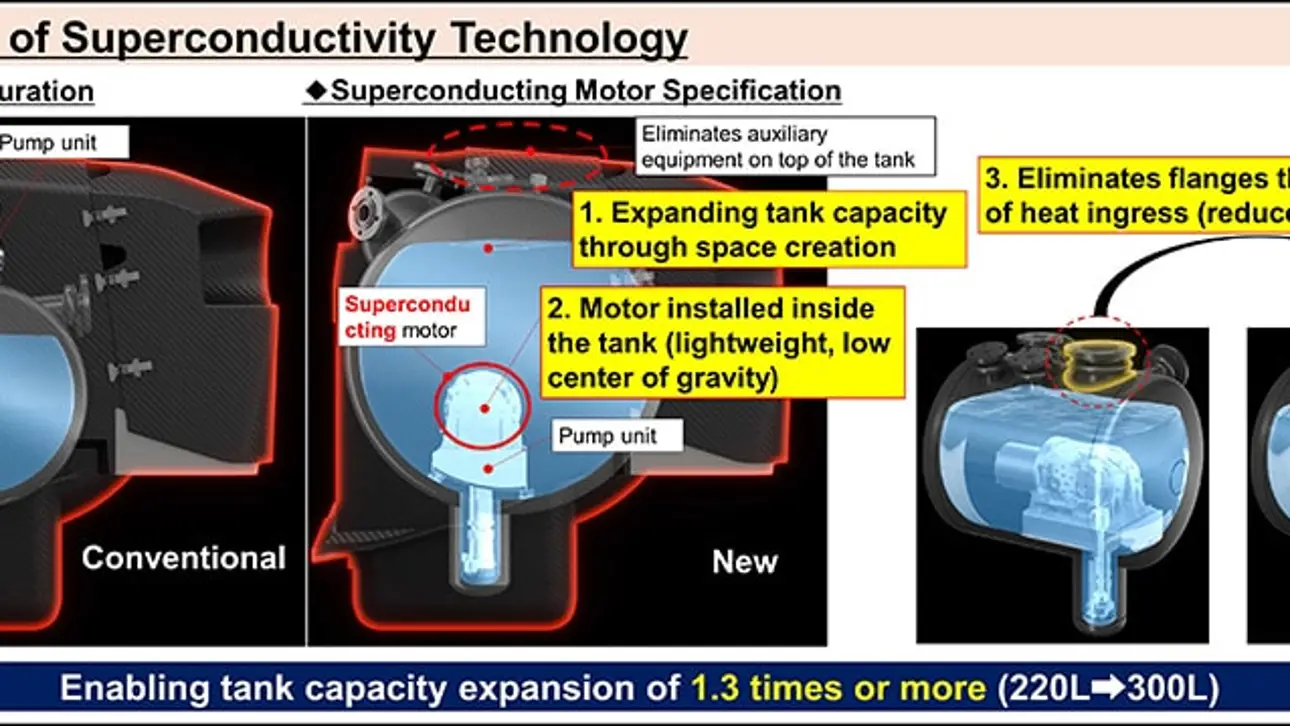
There’s a racing bonus, too. The heavy unit now sits lower in the car, which should improve the centre of gravity. For an ordinary buyer this isn’t about a sticker price yet, but about the long view: if hydrogen combustion engines are ever to move beyond experiments, they will need not slogans about clean fuel but real-world refuelling, range, reliability and predictable behaviour.
At Fuji, Toyota will pair the hydrogen engine with the DAT — Direct Automatic Transmission — for the first time. Its job is to shift at speeds close to a fast manual, but without the driver having to work a lever. In a race that lets the driver focus on lines, braking and overtaking.
Toyota isn’t walking away from electric cars, but it is sticking to its multi-pathway road to carbon neutrality. The question is whether its hydrogen engine can step out of the world of 24-hour experiments and into the world where cars are bought not by engineers but by ordinary drivers.
This English edition was prepared using AI translation under editorial oversight by SpeedMe. The original reporting is by Polina Kotikova
Latest Stories