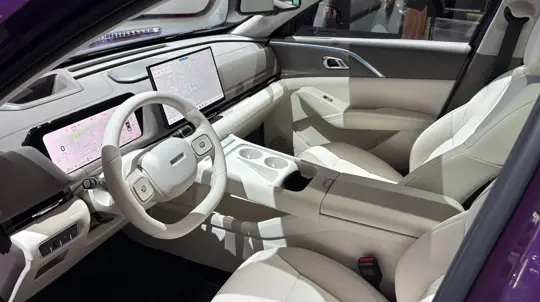
Business-class seats and an 84 kWh battery: the new Staria has arrived in Busan
 © A. Krivonosov / SPEEDME
Hyundai's electric flagship MPV targets Toyota Alphard and Lexus LM with an 800V platform, Executive Seats and a 364 km range. Price in Korea — 87.87 million won.
Author: Polina Kotikova
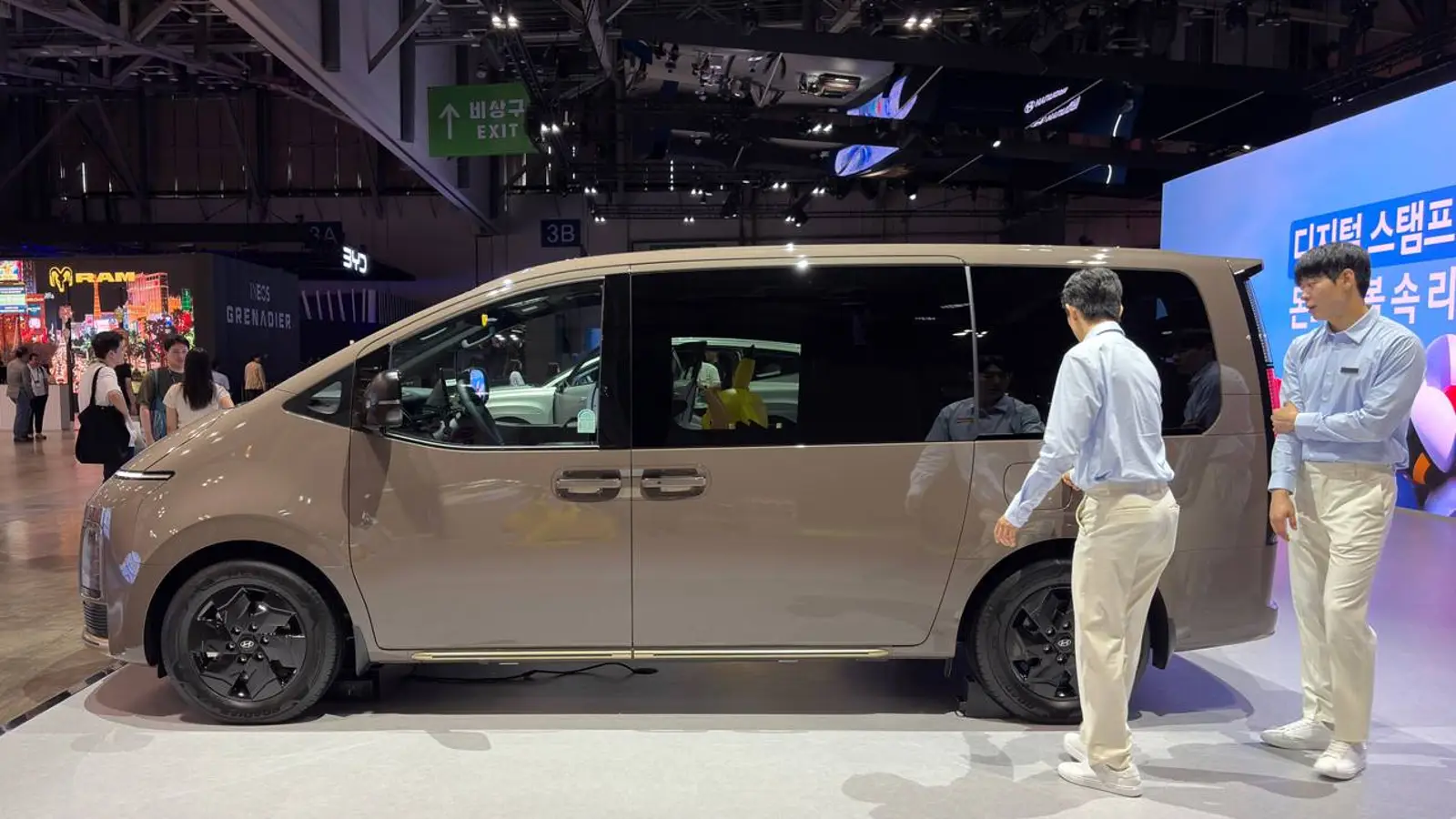
The Hyundai Staria Limousine Electric on the BIMOS 2026 stand doesn’t look like an ordinary minivan with a different powertrain — it looks like an attempt to step onto the turf of the Toyota Alphard and Lexus LM. In Korea, this version is priced at 87.87 million won — roughly $57,000 at the current exchange rate.
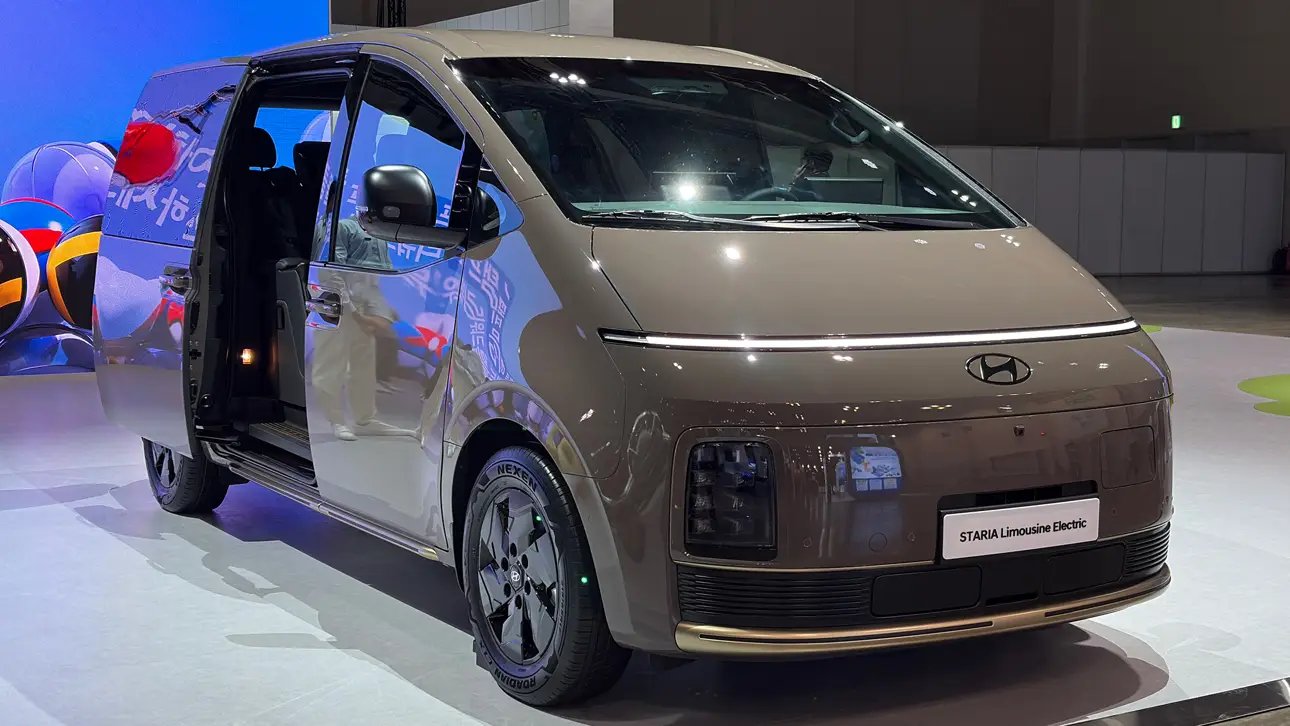
Externally, the Limousine Electric differs from the regular Staria subtly but clearly. Instead of the usual grille, there’s a sealed black-chrome panel with a rectangular pattern, gold trim runs along the bumpers and side steps, and a thin DRL light bar stretches across the front. The charging port is hidden on the left side of the front fascia, and the wheels are 18-inch dark multi-spoke units with green valves — Korea’s in-house marker for an eco-friendly version.
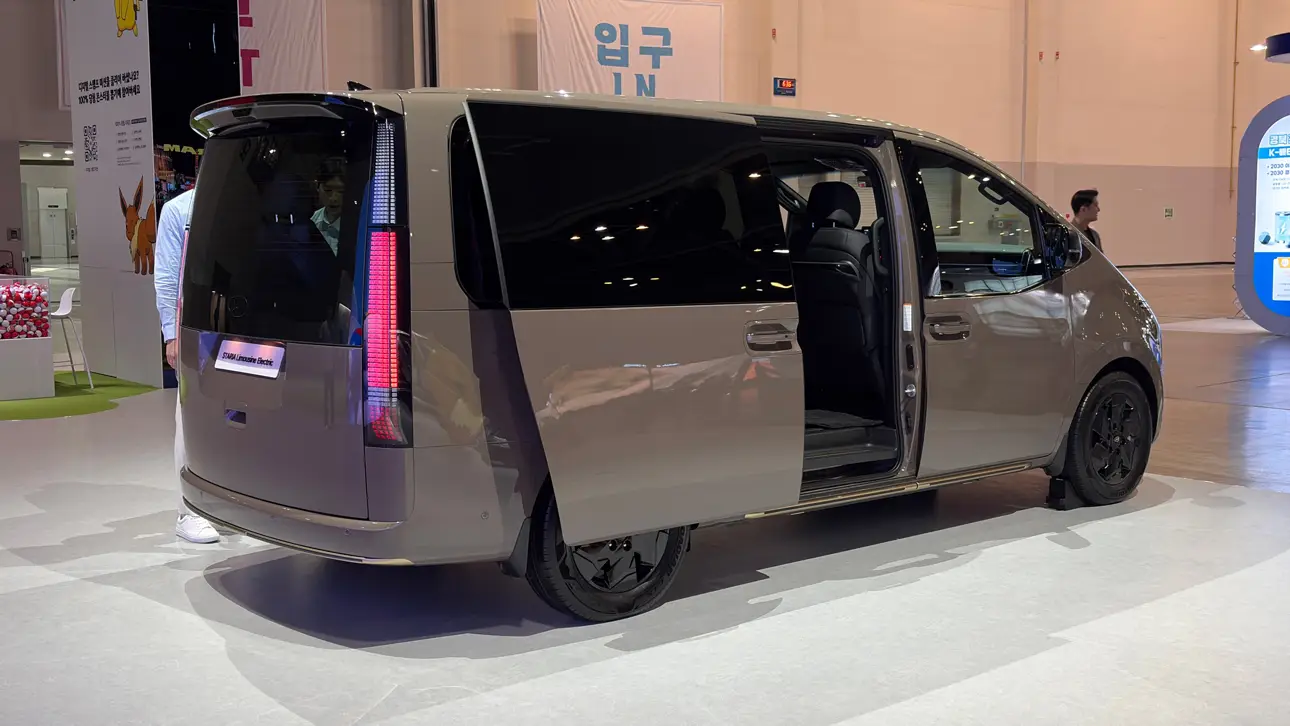
In profile, the Staria still resembles a passenger shuttle, but in the Limousine version that shape makes particular sense. Electrically operated sliding doors open access to the cabin, and a retractable powered step appears automatically when passengers board and tucks away on the move. At the rear — vertical pixel-style tail lamps and a small spoiler. Hyundai isn’t trying to dress this MPV up as a crossover: the bet is on space and the feeling of a business-class wagon.
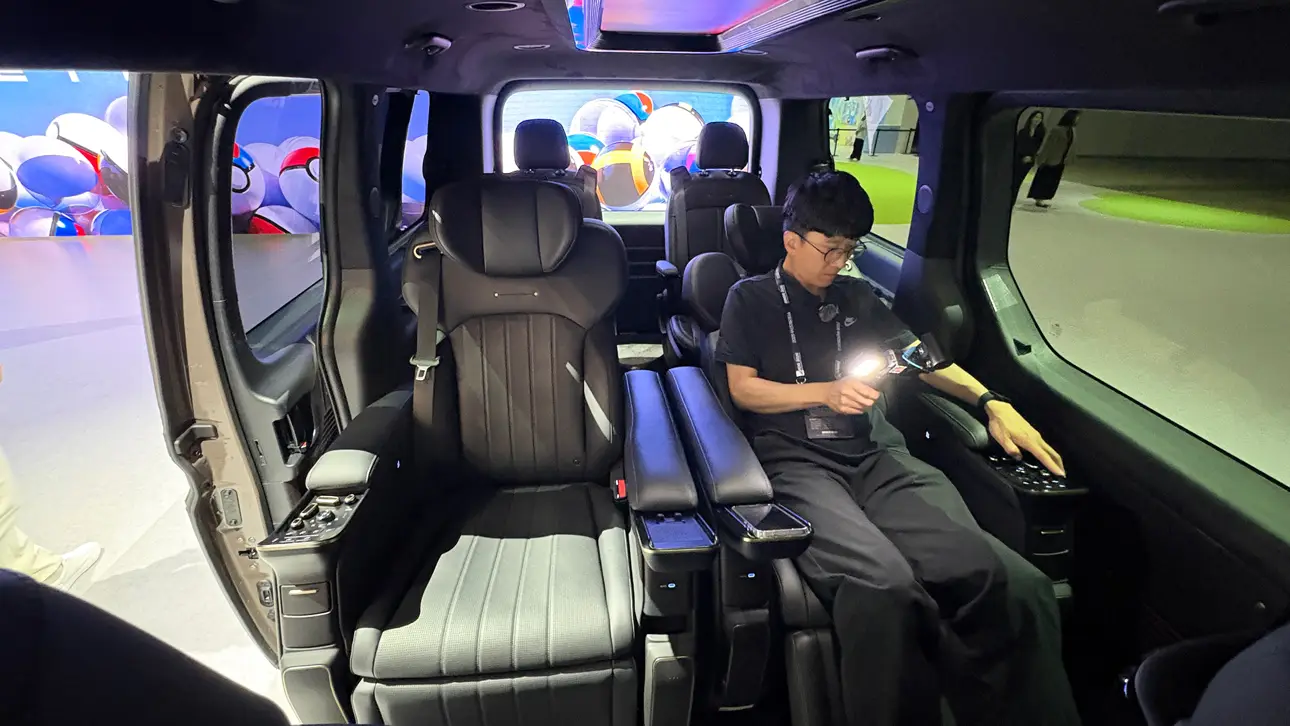
The real story is the second row. Two Executive Seats are trimmed in semi-aniline leather, adjust in 14 directions, feature a 14-cell pneumatic massage function and heated armrests and footrests. Between the chairs sits a long shared console with a tray and wireless smartphone charging, while overhead a panoramic glass roof and a 17.3-inch ceiling-mounted entertainment display look down on the passengers.
Hyundai has paid separate attention to acoustic comfort. The second row uses double-laminated sound-insulating glass, and parts of the steel suspension components have been swapped for aluminium to reduce unsprung mass and make the ride quieter. For a premium MPV this isn’t a side detail: Alphard or Lexus LM buyers aren’t paying for acceleration records, they’re paying to be calmer in the second-row seat than in an ordinary family car.
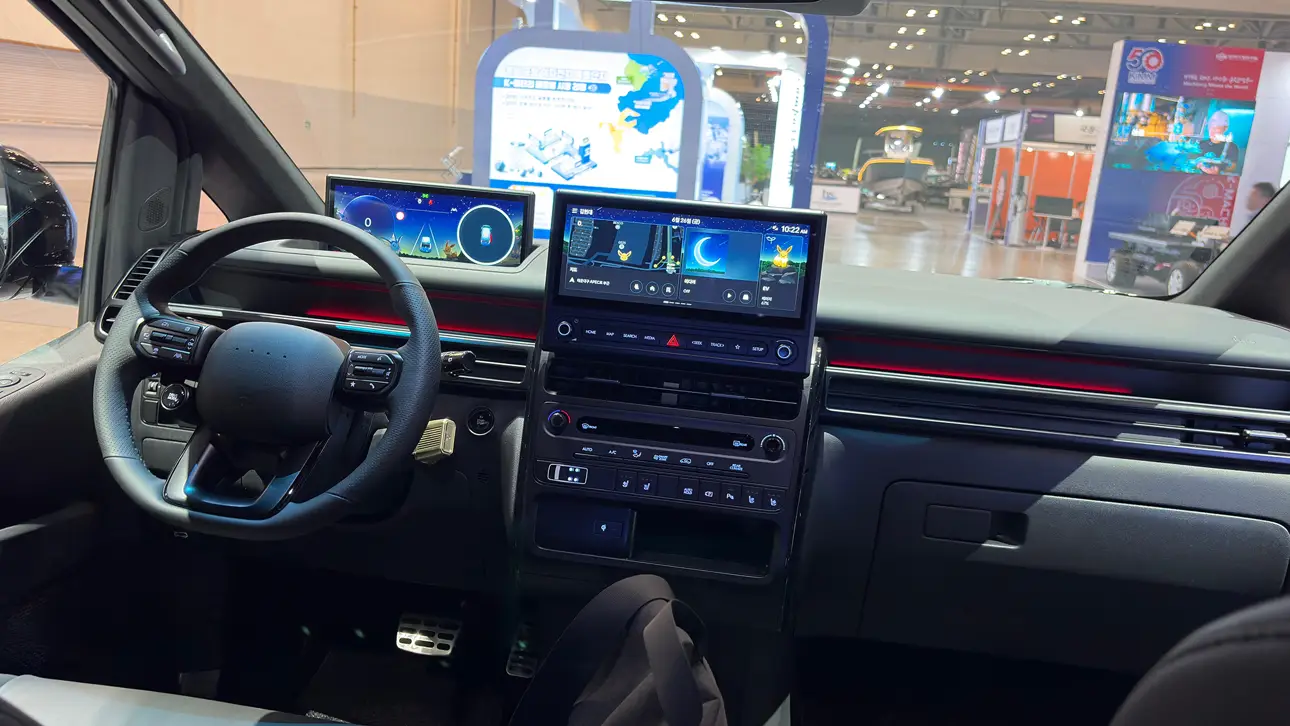
The technical side is built around a fourth-generation 84.0 kWh battery and an 800-volt architecture familiar from the Ioniq 5, Ioniq 6 and Ioniq 9. The single electric motor on the front axle delivers 160 kW, or 218 hp, and 350 Nm. The Staria Limousine Electric’s range is 364 km on the Korean cycle — less than the regular Staria Tourer Electric with its 387 km. The difference is explained by added mass: the seats, sound insulation and premium equipment all weigh something.
Charging from 10 to 80% on a 350 kW station takes around 20 minutes. Two charging ports have been retained — front and rear — along with the V2L function for powering external devices. For a minivan with a business-class cabin, that’s more useful than it sounds: the car can power equipment while parked, while the driver waits, or at off-site events.
In Korea, the Staria Limousine Electric comes only as a 6-seater and has already become the most expensive Staria in history. For comparison, the hybrid Staria Limousine with the 1.6-litre turbo engine in the same 6-seat configuration costs 69.09 million won. Even after eco-friendly vehicle tax breaks the electric version stays around 85 million won, so Hyundai clearly isn’t trying to make it mainstream — it’s a showpiece, a corporate shuttle and an alternative to the Japanese premium MPVs.
The rivals don’t need pointing out. The Toyota Alphard and Lexus LM have become noticeably more popular in Korea, and Hyundai is answering not by copying their shapes but with its own scenario: the futuristic Staria body, electric drivetrain, a lavish second row and fast charging. The Alphard wins on tradition and resale value, the Lexus LM on status and finish — but the Staria Limousine Electric leads on technology and a more unusual presence.
Hyundai hasn’t simply electrified the Staria. It has shown that a premium MPV can be sold not only through leather, blinds and massaging seats, but through an 800-volt platform as well. In a segment where the second-row passenger matters more than the driver, this is a rare case where an electric car actually looks like the logical choice.
This English edition was prepared using AI translation under editorial oversight by SpeedMe. The original reporting is by Polina Kotikova
Latest Stories