AION Ray 7 2026: Price, Range and Specs of GAC's New Electric Sedan
 © A. Krivonosov / SPEEDME
GAC AION unveiled the Ray 7, a nearly 5-metre electric fastback with a 180kW Huawei motor and 700km CLTC range, at the Chengdu Motor Show.
Author: Polina Kotikova
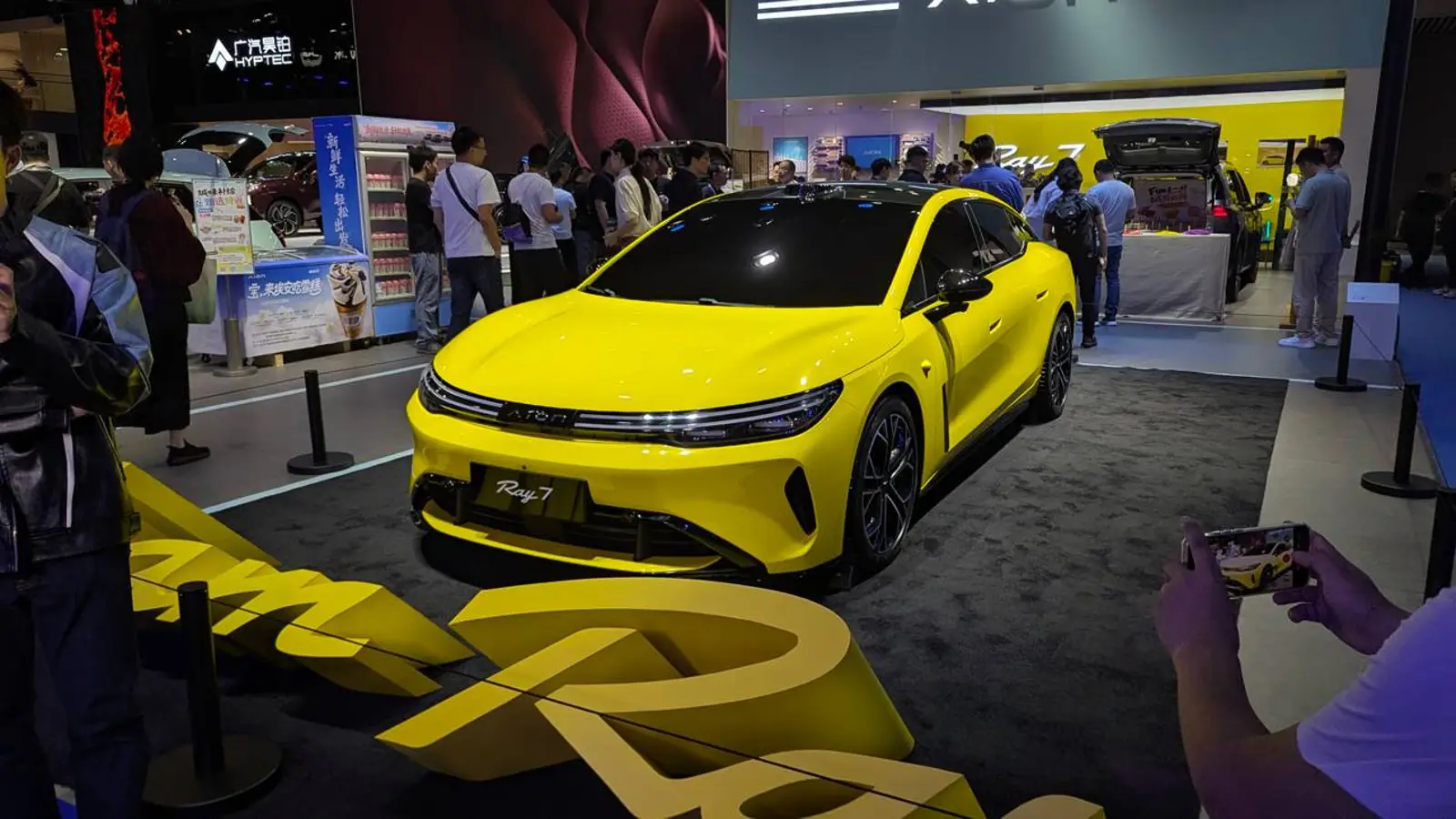
SPEEDME.RU photographed the new AION Ray 7 at the Chengdu Motor Show 2026 — an electric fastback measuring almost five metres that opens a separate Ray family. The car was officially unveiled on August 19 in Dongguan, making the Chengdu show its first major public appearance at an international motor show. Pricing and a sales start date have not yet been announced.
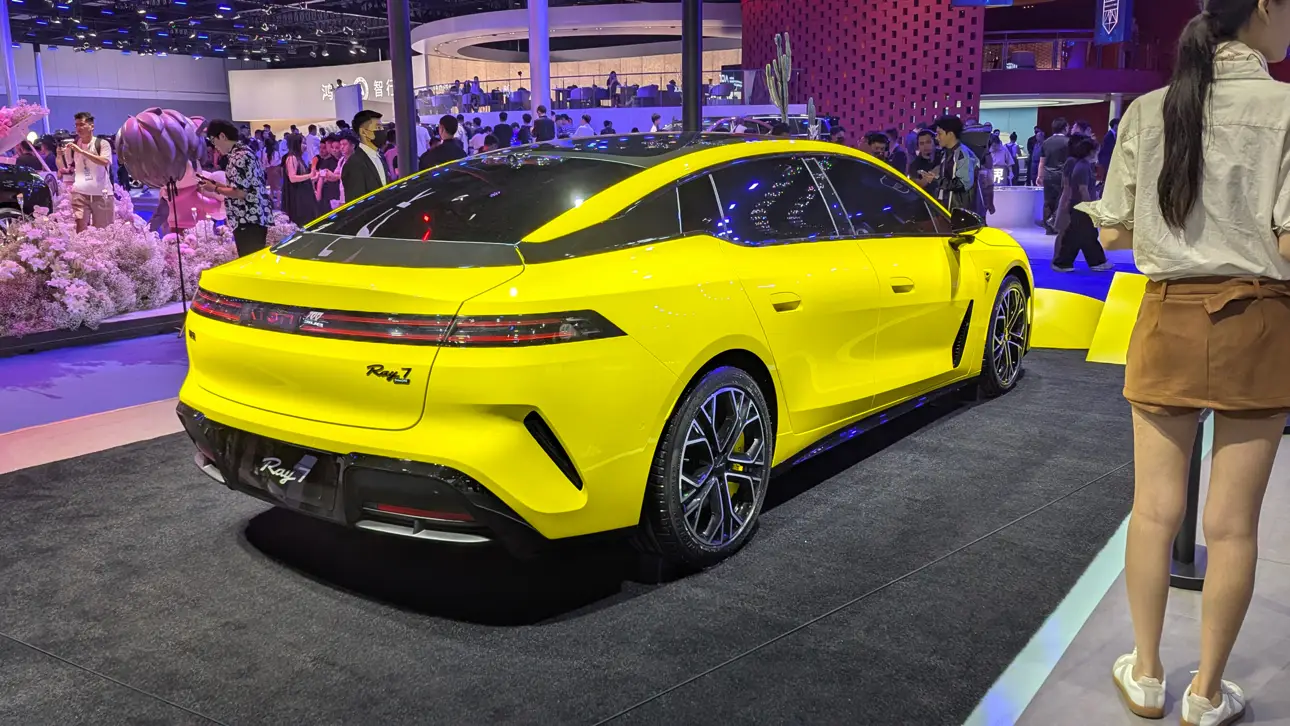
On the stand, the sedan was shown in the brand's signature Lightning Yellow with a contrasting black roof, dark multi-spoke wheels and yellow brake calipers. The Ray 7 is the first AION model to receive the brand's updated emblem: the name is integrated into the front light bar and can illuminate.
AION Ray 7 length and drag coefficient: nearly five metres, Cd of 0.22
The AION Ray 7 measures 4,960 mm in length, 1,900 mm in width and 1,455 mm in height, with a 2,920 mm wheelbase. In terms of size, it's a mid-size to large sedan comparable to the Xiaomi SU7 and other new-generation Chinese electric fastbacks. China's Ministry of Industry and Information Technology lists a five-seat cabin, a top speed of 180 km/h and 17- or 19-inch wheels.
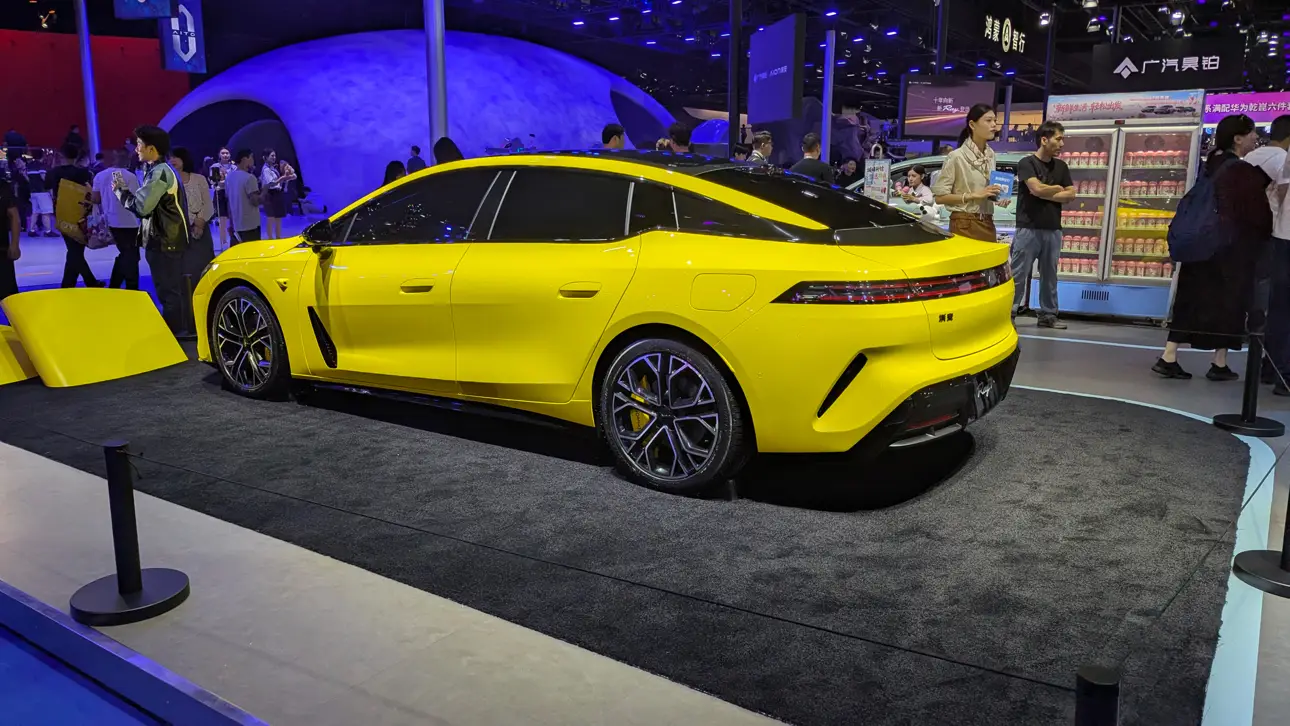
The body features a sloping roofline, a short trunk lid with a subtle lip, semi-flush door handles and pronounced air ducts in the front bumper. After 14 aerodynamic refinements, the drag coefficient was brought down to 0.22. Besides the yellow finish, the model is also offered in purple, called Midsummer Purple.
The roof of the car photographed by SPEEDME shows no separate protruding lidar unit. That doesn't necessarily mean the advanced driver-assistance suite is absent: Chinese certification documents explicitly cover versions both with and without the roof-mounted radar module. The sensor package will likely depend on trim level, though AION hasn't yet disclosed the exact lineup structure.
Huawei electric motor and 9.7 kWh consumption
The AION Ray 7 is built on a rear-wheel-drive electric platform. The single Huawei motor produces 180 kW, or around 245 hp. The maker uses the integrated HUAWEI DriveONE drive unit, its own thermal management system and a combined module that performs 28 functions.
Claimed range reaches 700 km on the Chinese CLTC cycle, while rated energy consumption is just 9.7 kWh per 100 km. Both figures still need to be confirmed by independent testing: the CLTC cycle typically yields a more optimistic result than the European WLTP standard and real-world high-speed driving.
Certification documents reveal two Ray 7 variants. One is fitted with lithium iron phosphate batteries from GAC Aion's own Inpai unit and has a kerb weight of 1,720 kg. The other uses CATL cells and weighs 1,855 kg. The 135 kg difference hints at batteries of different capacity or differing equipment levels, though the automaker hasn't yet published specs for the entry-level version.
Fully electric brakes and double-wishbone suspension
The Ray 7 is the first production car to feature a new architecture that unifies traction and braking control on a single chip. The HUAWEI DriveONE EMB system uses electromechanical brake actuators. AION claims a stopping distance of 33 metres from 100 km/h and a backup stopping scenario in case the main actuators fail.
The front suspension uses a double-wishbone layout with aluminium components, while a five-link setup is fitted at the rear. The car also gets adaptive FSD dampers, front and rear stabiliser bars and the Huawei iTRACK system, which manages traction on slippery surfaces. AION drew on chassis-tuning expertise from engineers who previously worked on Alfa Romeo vehicles.
Higher-end versions will get 27 sensors, including a 192-line lidar and three 4D radars. The software is based on technology used in WeRide robotaxis: claimed capabilities include driving from a parking spot to a destination, automatically finding a free parking space and passing through barrier gates. This doesn't mean the car gets Level 4 autonomy — it's the source of the algorithms behind a conventional driver-assistance suite.
How much the AION Ray 7 could cost
There's no official price list yet. Chinese industry media expect positioning in the 200,000–250,000 yuan range. The Ray 7 isn't confirmed for markets outside China, but its combination of Huawei tech, an emotional fastback design and rear-wheel drive marks a shift for AION away from purely utilitarian mass-market EVs toward a more youth-focused, driver-oriented lineup.
This English edition was prepared using AI translation under editorial oversight by SpeedMe. The original reporting is by Polina Kotikova
Latest Stories