Chery Zongheng F700 Grassland Wolf 2026: specs, price and off-road upgrades
 © A. Krivonosov / SPEEDME
Chery's Jetour Zongheng F700 gets a factory off-road customization package with a snorkel, rooftop tent and winch, built on a 904-hp plug-in hybrid platform with a 1,300 km range.
Author: Nikita Novikov
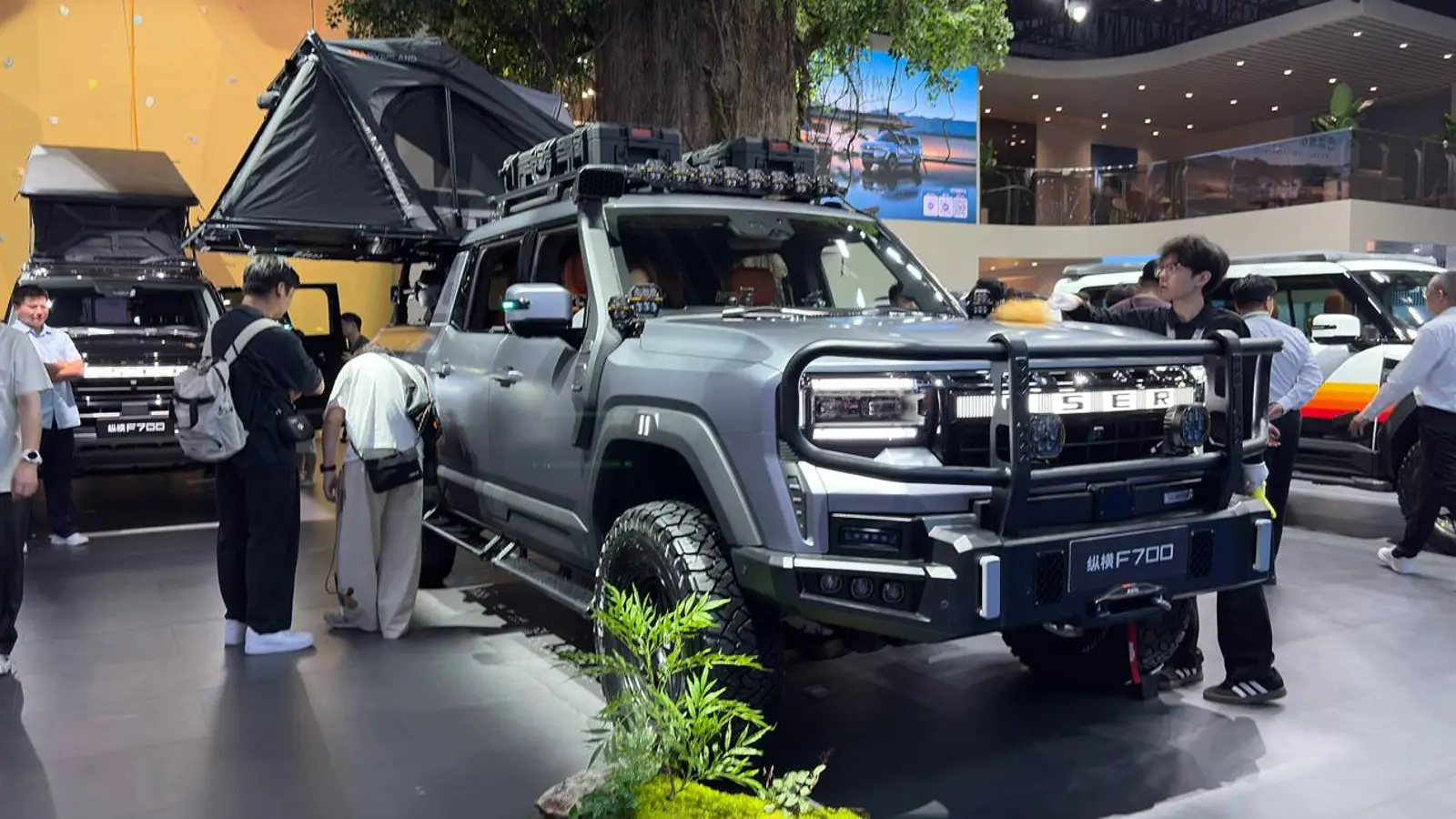
At the Chengdu Auto Show in China, an SPEEDME.RU correspondent photographed one of the most extreme versions of Chery's new pickup truck — the Zongheng F700 Grassland Wolf. This isn't just a show car with decorative body kit pieces, but an official factory customization route for the F700, built for long-distance travel, camping and heavy off-roading. The standard pickup only went on sale in China on August 6, less than three weeks before the show.
The vehicle in these photos differs radically from the standard F700. As it turns out, the front end gets a massive bull bar, extra lighting and a winch, while the roof carries cargo boxes, a whole row of spotlights and a fold-out rooftop tent. A snorkel runs up the side, and the standard road tires have given way to large off-road rubber. That combination fits the Grassland Wolf philosophy perfectly: Chery describes it as a mix of heavy-duty off-road gear and a fully-fledged “home on wheels” for travel.
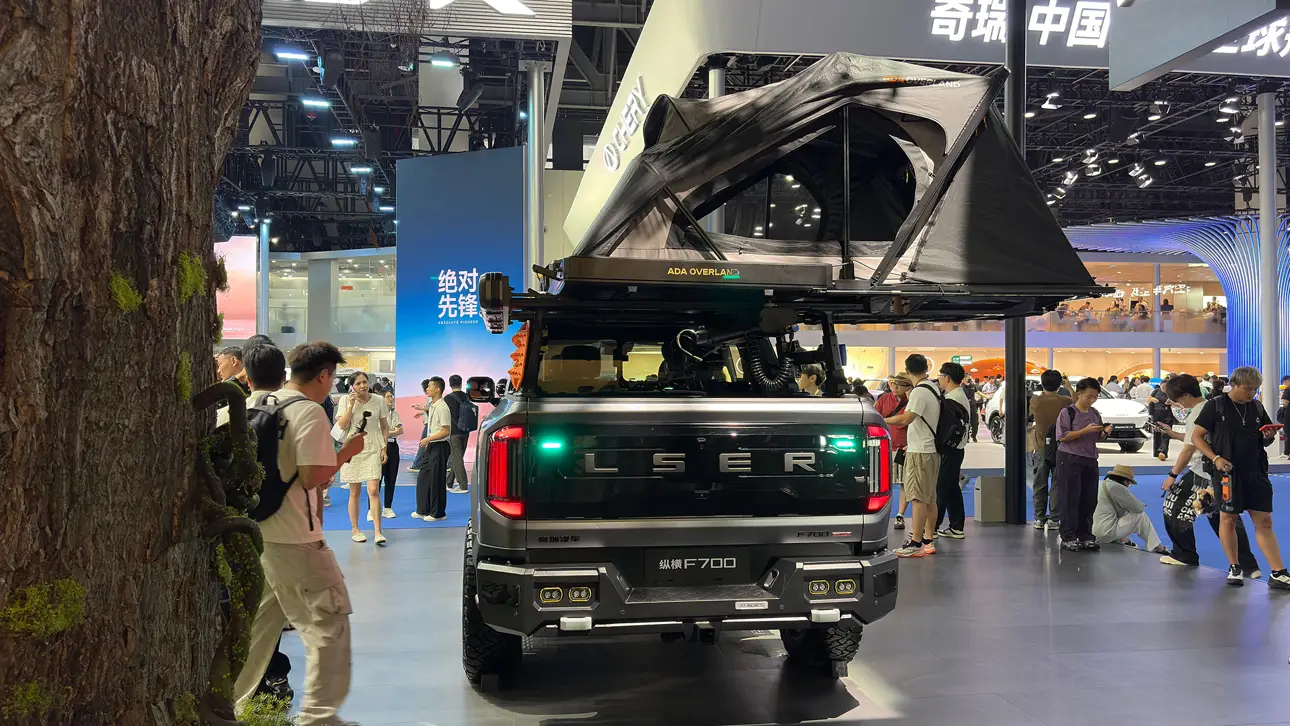
The F700 Grassland Wolf isn't actually a Chengdu premiere. It first appeared at the Beijing Auto Show in spring 2026. For the current show, Zongheng brought several F700 variants, including the Grassland Wolf and a separate touring-focused build, showing off what the factory customization ecosystem can do.
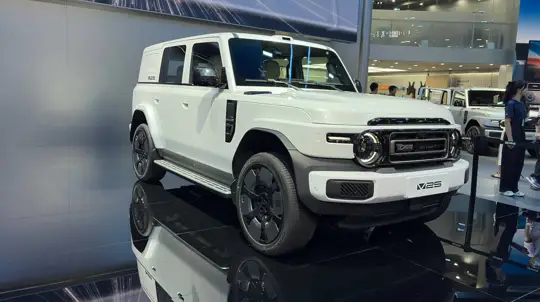
Underneath the expedition gear sits the standard production Zongheng F700. It's a body-on-frame pickup measuring 5,495 mm long, 2,050 mm wide and 1,985 mm tall, with a 3,350 mm wheelbase. Bed volume is rated at 1,300 liters, and the truck comes with a 220V outlet, up to 20 kW of power output while parked, and certified towing for trailers up to 3.5 tonnes.
The powertrain is the real highlight. The F700 runs Chery's plug-in hybrid Kunpeng CDM-O system, combining a 2.0-liter turbo engine with front and rear electric motors and a two-speed DHT hybrid transmission. Combined output reaches 665 kW, or 904 hp, with 1,135 Nm of torque. Despite its size and body-on-frame construction, the truck hits 100 km/h in around 5 seconds.
A 34.13 kWh CATL battery is good for up to 150 km on the CLTC cycle without the gas engine kicking in. Total range reaches 1,300 km. The truck uses an 800V architecture, with a 30–80% charge taking about 10 minutes. With a depleted battery, claimed fuel consumption is 7.95 L/100 km on the WLTC cycle.
Off-road, the F700 gets an intelligent XWD-S all-wheel-drive system, front and rear locking differentials and what Chery calls a central energy lock. The production truck can wade through water up to 900 mm deep, has a 32-degree approach angle and can climb grades as steep as 45 degrees. The Grassland Wolf build adds off-road tires, reworked suspension and protective gear on top of that base.
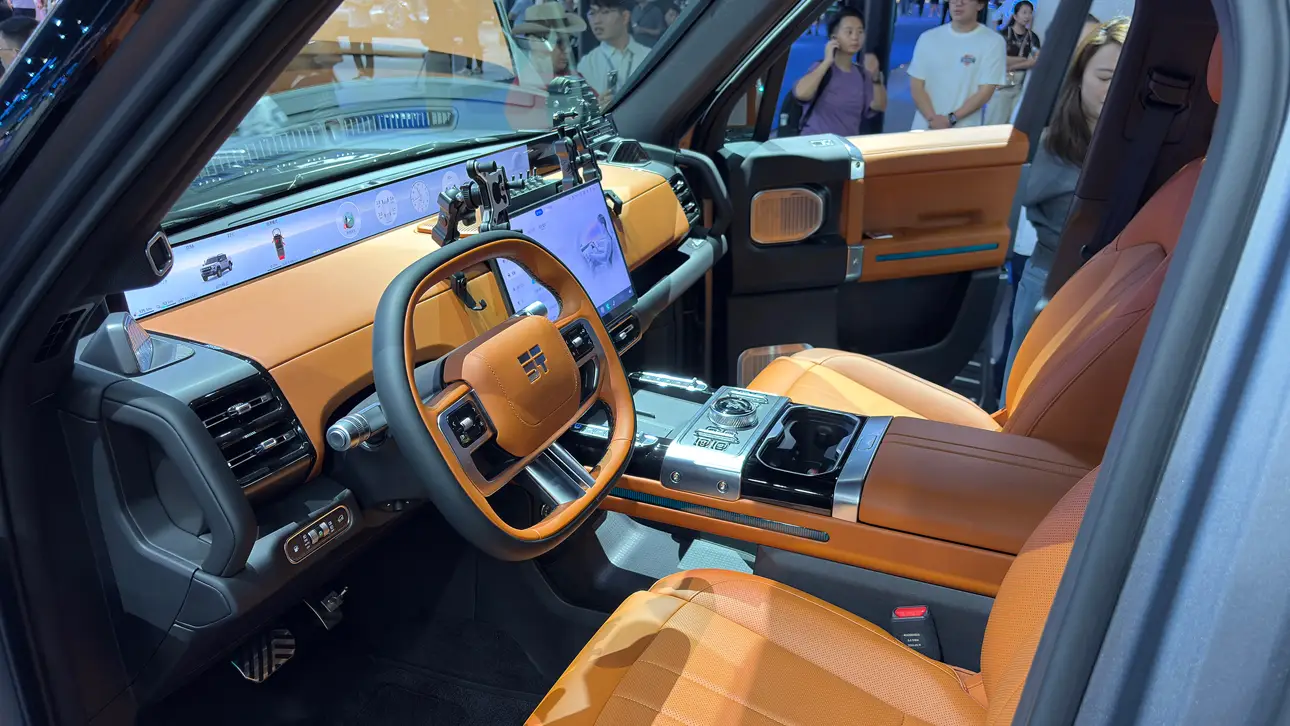
Inside, the contrast with the rugged exterior is obvious. Despite all the expedition equipment, the cabin looks close to what you'd expect in a large premium SUV. A 35.4-inch panoramic display stretches across the driver's view, with a separate 15.6-inch screen mounted centrally. The infotainment system runs on a Snapdragon 8255 chip with Zongheng OS. Pricier production trims add heated and ventilated seats, front seat massage and an onboard fridge.
The standard F700 is already on sale in China. Official pricing runs from 314,900 to 354,900 yuan, or 299,900 to 339,900 yuan under a limited-time promotion — roughly $42,000 to $50,000 at current exchange rates. Pricing for the Chengdu expedition-spec Grassland Wolf hasn't been announced separately yet: the off-road and touring components fall under Chery's official customization program.
What matters here is what Chery is actually selling: not just a pickup, but a ready-made travel platform. Buyers get a powerful generator on wheels straight from the factory, the ability to tow a 3.5-tonne trailer, power a campsite, and build out a full expedition module on the cargo bed. The truck from Chengdu shows just how far that idea can go.
This English edition was prepared using AI translation under editorial oversight by SpeedMe. The original reporting is by Nikita Novikov
Latest Stories