A red carbon hypercar from a 3D printer: why Czinger 21C looks like something from the future
 © czinger.com
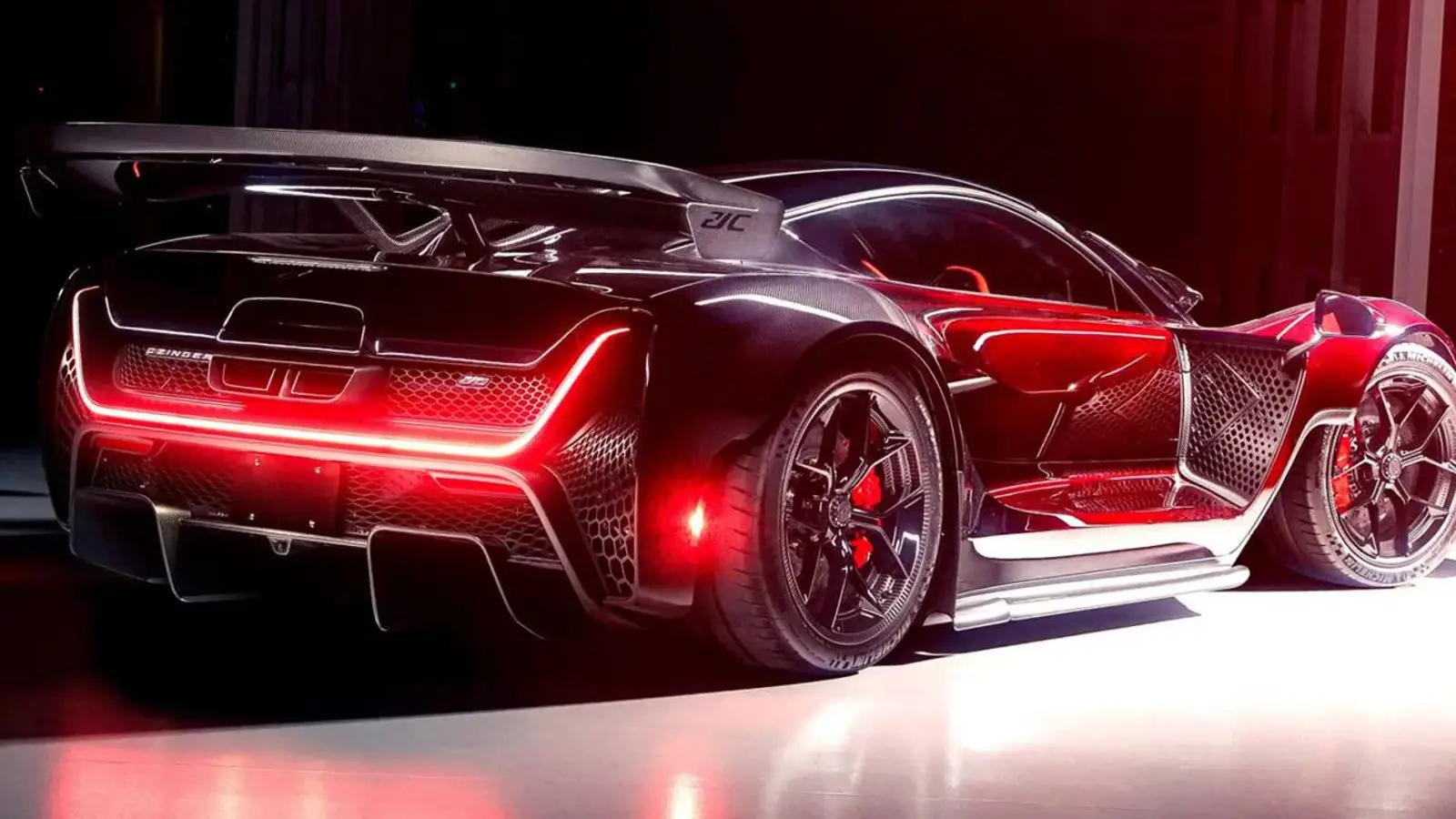
The new Czinger 21C in red carbon shows where the top tier of the auto industry is heading — hypercars now compete on how they are built, not just on engines and acceleration.
Author: Nikita Novikov
Czinger again uses the 21C as a showcase not only of speed, but of technology. The new example in red carbon looks like a show car, yet behind the striking shell sits one of the most unusual manufacturing schemes in the hypercar world.
The 21C is not built according to the familiar logic of «a carbon monocoque plus a network of parts suppliers». Parent company Divergent Technologies relies on additive manufacturing: some of the structural elements are designed by algorithms and printed in metal, then joined to a carbon passenger cockpit. The car uses hundreds of 3D-printed parts assembled into dozens of nodes. That is why the suspension components and subframes look almost organic — like bones rather than classic automotive parts.
The powertrain is no less serious. At the heart of the Czinger 21C sits a 2.88-litre twin-turbo V8 paired with two electric motors on the front axle. Early versions delivered around 1,250 hp, while the Blackbird makes up to 1,350 hp. Depending on the trim, the 21C can be a track-focused variant with a large rear wing, or the faster V Max with an elongated tail and reduced drag. The 0–100 km/h sprint takes about 1.9 seconds, and the V Max top speed is claimed at 407 km/h.
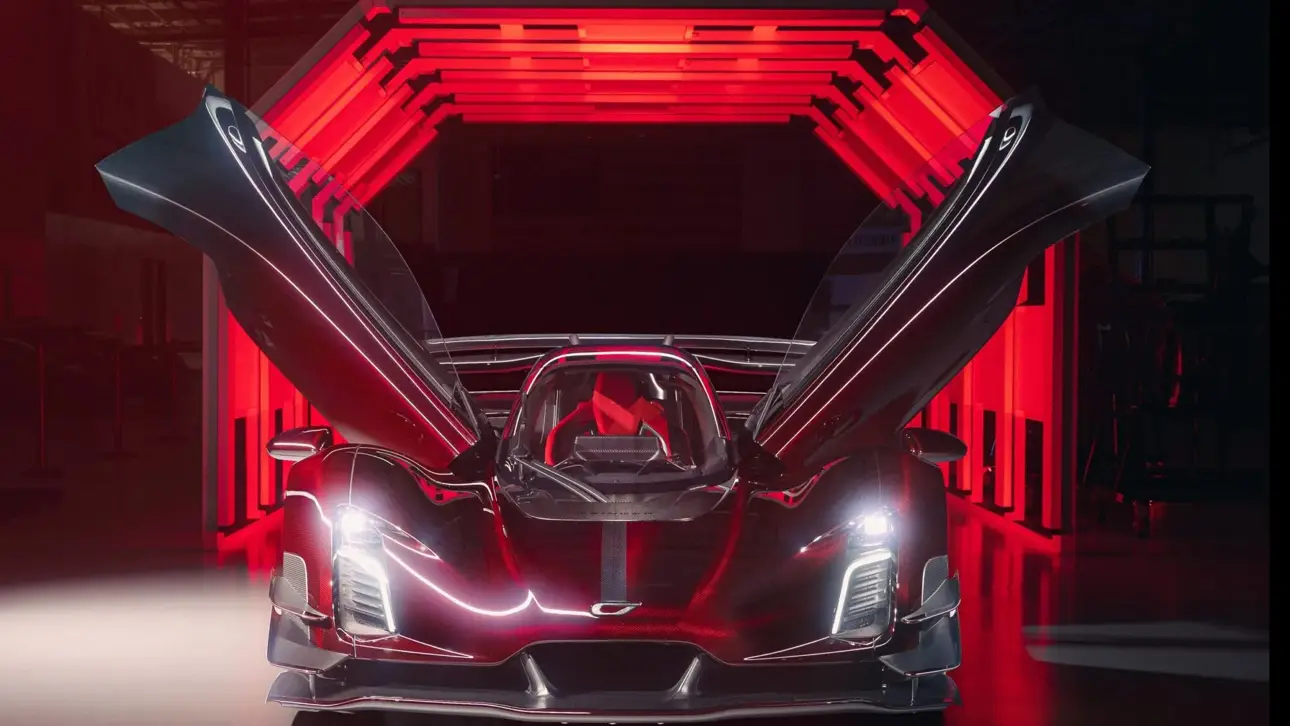
Red carbon matters here as more than just a colour. In the hypercar world, a buyer spending $2–3 million no longer just wants «the fastest car». They want an object that cannot be mistaken for a Ferrari, Lamborghini, McLaren or Bugatti. Czinger has that argument: central driver seat, tandem passenger position, aircraft-like silhouette, and a manufacturing technology that competitors cannot easily copy.
The price tag matches. The 21C and 21C V Max start at roughly $2.36 million. But with options and bespoke finishes, the real deals reported by the US press often climb to $2.7–2.8 million. For comparison, Bugatti Tourbillon and Koenigsegg Jesko play in the same league of rarity, but Czinger sells a different kind of exclusivity: not brand heritage, but the way the car is made.
There is a weak spot too. Czinger still lacks the historical weight of Ferrari, McLaren or Bugatti, so the buyer is paying not for decades of victories and collectible liquidity but for a technological bet. If the 21C remains a rare engineering icon, such cars will hold their value. If the brand fails to take root, their story becomes riskier.
That is exactly why the red 21C is interesting — not as another special colour, but as a signal of where the top layer of the auto industry is heading: hypercars no longer compete only on engines and acceleration. The way the car is born matters now, and at Czinger that method looks almost more important than the bodywork colour.
This English edition was prepared using AI translation under editorial oversight by SpeedMe. The original reporting is by Nikita Novikov
Latest Stories