Old metal, new physics: what the Blazer crash test really proves
 © Скриншот видео
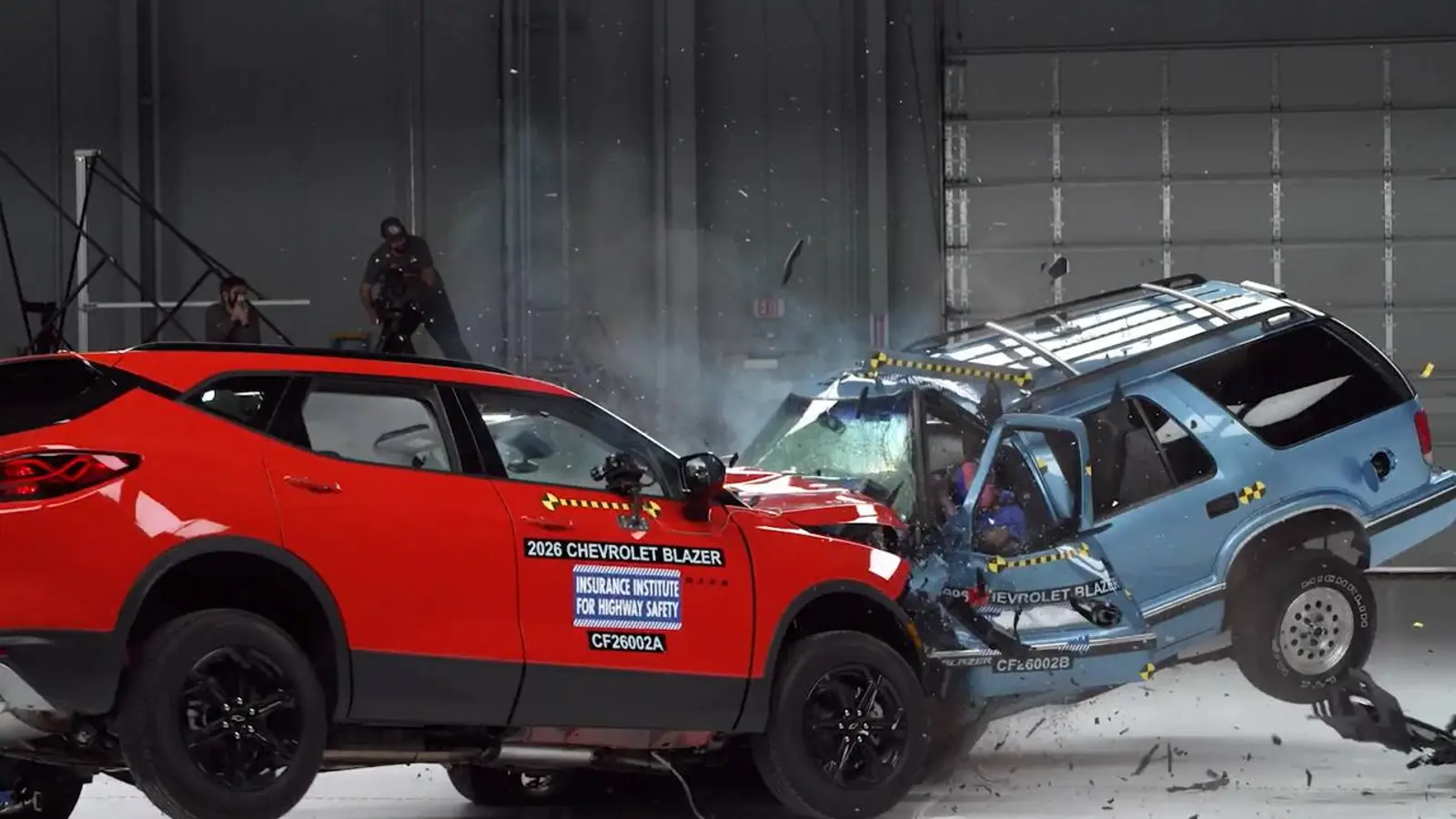
A side-by-side crash test of the 1995 Chevrolet Blazer and the new Blazer EV shows how much SUV occupant protection has changed in three decades.
Author: Polina Kotikova
Comparing the old Chevrolet Blazer to the modern Blazer EV chips away at the familiar myth of «real metal cars». The video makes the difference obvious without any tables: in the 1990s SUV the impact reaches into the cabin, while on the new model the body works as a protection system rather than just a big metal shell.
The 1995 Blazer looks tough by old standards: body-on-frame construction, a tall body, a simple cabin, plenty of metal — the image of a classic SUV. But in a crash test what matters is not mass itself, but where the impact energy goes. On the older vehicle the pillars and front end do a worse job of holding the survival space, and the dummy’s head ends up in a zone where, in a real crash, the risk of serious injury rises sharply.
The modern Blazer EV is built differently. It comes with new requirements for its structural frame, airbags, seat belts, programmable crumple zones, electronic assistants and a stiff battery platform. In IIHS testing the electric Blazer earned high marks, including a Good rating in the updated moderate overlap front test. That doesn’t make it invulnerable, but it shows how far engineering has come.
For a used-car buyer that’s an uncomfortable but useful lesson. An old SUV can be cheaper, easier to repair and feel more reassuring thanks to thick doors and rough plastic. But safety isn’t measured by the sound of a door closing. The cars of the 1990s were designed for different standards, different test speeds and a different set of requirements for occupant protection.
The story is the same with rivals: older generations of the Ford Explorer, Jeep Cherokee, Toyota 4Runner or a Chevrolet Tahoe from that era may appeal for their character, simplicity and durability, but a modern mid-size crossover often protects people better than a big SUV from the past. Especially in small-overlap frontal crashes, where older bodies often exposed their weak points.
The Blazer EV doesn’t have to win over fans of classic Chevrolets. But one crash test is a reminder of a simple truth the market sometimes forgets: nostalgia doesn’t work as an airbag.
This English edition was prepared using AI translation under editorial oversight by SpeedMe. The original reporting is by Polina Kotikova
Latest Stories