When the dashboard goes dark: a software bug pulls 96,310 Hyundai Tucsons into a US recall
 © A. Krivonosov
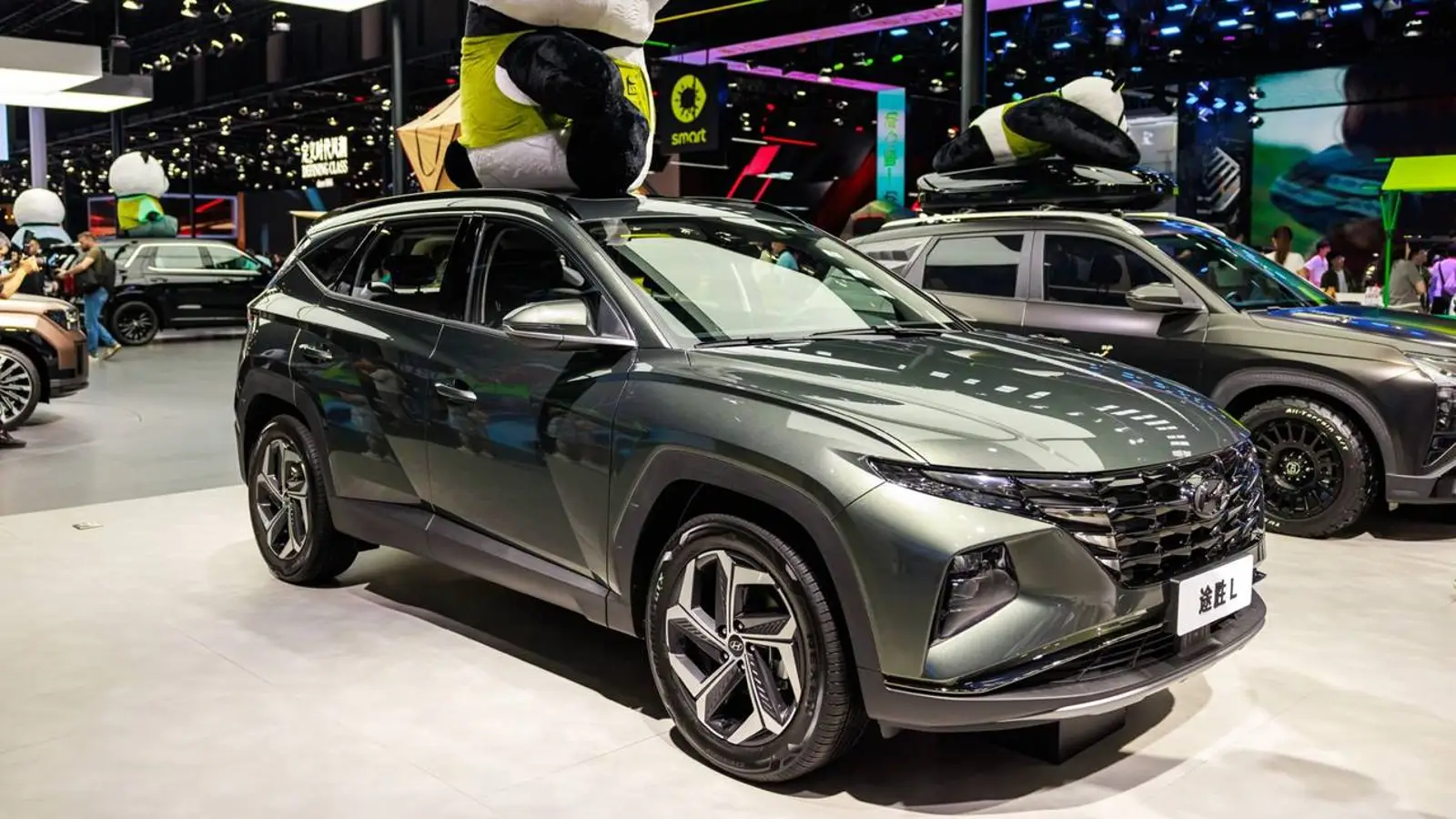
Hyundai is recalling 96,310 Tucson, Tucson Hybrid and Tucson PHEV crossovers in the US. A software error in the link between the instrument cluster and the HUD can blank the dashboard while driving.
Author: Nikita Novikov
Hyundai is recalling 96,310 vehicles in the United States over a fault in the instrument cluster display. According to Reuters, citing NHTSA, the issue can leave drivers without critical information — speed, fuel level or warning signals.
The campaign has been assigned the number 26V400 and covers the Tucson, Tucson Hybrid and Tucson Plug-In Hybrid crossovers from the 2025–2026 model years. VIN lookup is already live on the NHTSA website, and owner notification letters are scheduled to be mailed in late August.
At first glance this does not look like a classic «hardware» defect such as brakes or airbags. But on modern cars the digital instrument panel has become as much a safety feature as the headlights or the seatbelts. The moment the screen stops showing speed, telltales or system warnings, the driver loses the basic feedback the car owes them.
NHTSA classifies such failures as a violation of FMVSS 101 «Controls and Displays». The standard governs precisely how controls and warning indicators must be displayed. In other words, the issue is not that the owner is briefly stuck with less attractive graphics — it is that the car can stop showing the data needed for safe driving.
The root cause is not the screen itself nor the cluster hardware, but the logic linking the cluster to the head-up display (HUD). Under a specific fault the HUD and the cluster reboot at the same time, leaving the driver without gauges or telltales for several seconds. The new firmware isolates the HUD reset from the cluster reset, so that a single glitch can no longer knock out both screens at once.
For Hyundai this is another reminder of how a software error becomes a fully fledged recall. Recent cars depend ever more on displays, infotainment, control units and updates. A glitch that would once have looked like a «screen hiccup» now falls under regulators' remit: if the speedometer or a warning light goes missing, the crash risk goes up.
The fix should be relatively easy for owners. The cluster software will be updated free of charge — either over the air via Hyundai Bluelink, or at the dealer. That format suits the manufacturer too: there is no need to swap out expensive components on a mass scale, and the patch can be rolled out faster than a classic service campaign with part replacement.
But the trend itself is unsettling. The more functions migrate to digital screens, the higher the cost of a software bug. The failure of a single bulb or analogue gauge used to be a local problem; today a single interface glitch can remove several readings at once. From the driver's seat it feels like a sudden loss of control over information, even though the car itself keeps moving.
The problem does not make Hyundai a dangerous brand, but it sketches a new reality of the car business. Today a vehicle's reliability is no longer defined by the engine, transmission and suspension alone. Sometimes safety depends on how quickly the manufacturer fixes a line of code behind the screen in front of the driver.
This English edition was prepared using AI translation under editorial oversight by SpeedMe. The original reporting is by Nikita Novikov
Latest Stories