Smaller than Bentayga, sharper than expected: Bentley's first EV borrows from the Cayenne
 © A. Krivonosov
The disguised prototype of Bentley's first production EV is back on the Ring. The model will sit below the Bentayga and share its platform with the Porsche Cayenne Electric.
Author: Nikita Novikov
| Updated:
Bentley continues to fine-tune its first series-production electric crossover: a camouflaged prototype has been spotted again at the Nürburgring. The car is expected to arrive as a 2027 model and will not just be another SUV for the marque, but its first full step into the expensive electric segment.
According to Autoevolution, the newcomer will slot below the Bentayga in the lineup and adopt a more streamlined body with a closed front end, horizontal lighting elements and narrow headlamps. In earlier materials the model was referred to as the Luxury Urban SUV, with Mayon and Barnato cited among the possible names, but nothing has been officially confirmed.
The technical intrigue matters more than the camouflage. The electric Bentley is expected to share the Premium Platform Electric architecture with the Porsche Cayenne Electric. For the buyer, this means not a from-scratch experiment but an expensive British shell wrapped around an already mature Volkswagen Group platform. Autoevolution has also suggested that output could potentially reach up to 1,140 hp, although Bentley has yet to reveal the production specs.
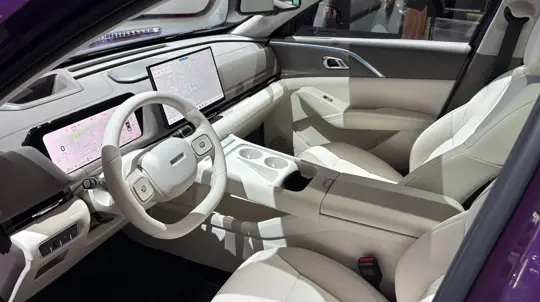
A comparison with the Bentayga is inevitable. Bentley's current SUV has long been the brand's main commercial tool, but its philosophy is built around combustion engines and hybrids. The electric model will play it differently: quieter, quicker off the line, heavier because of the battery and probably more expensive in the higher trims. To compete with Rolls-Royce, the Range Rover Electric and future AMG EVs, the badge alone is no longer enough — range, charging, handling and a sense of luxury that doesn't dissolve behind a giant screen are all required.
Bentley is testing its electric crossover on a track where weight and a soft suspension cannot easily be hidden. For a heavy luxury EV, that is arguably more honest than any glossy teaser.
This English edition was prepared using AI translation under editorial oversight by SpeedMe. The original reporting is by Nikita Novikov
Latest Stories