Mass-market workhorses, V12 icons and turbo madness: the engines that shaped the car industry
 © A. Krivonosov
From a mass-market workhorse to a V12 bought almost as a piece of art — Autocar's 50 greatest road car engines, chronologically.
Author: Polina Kotikova
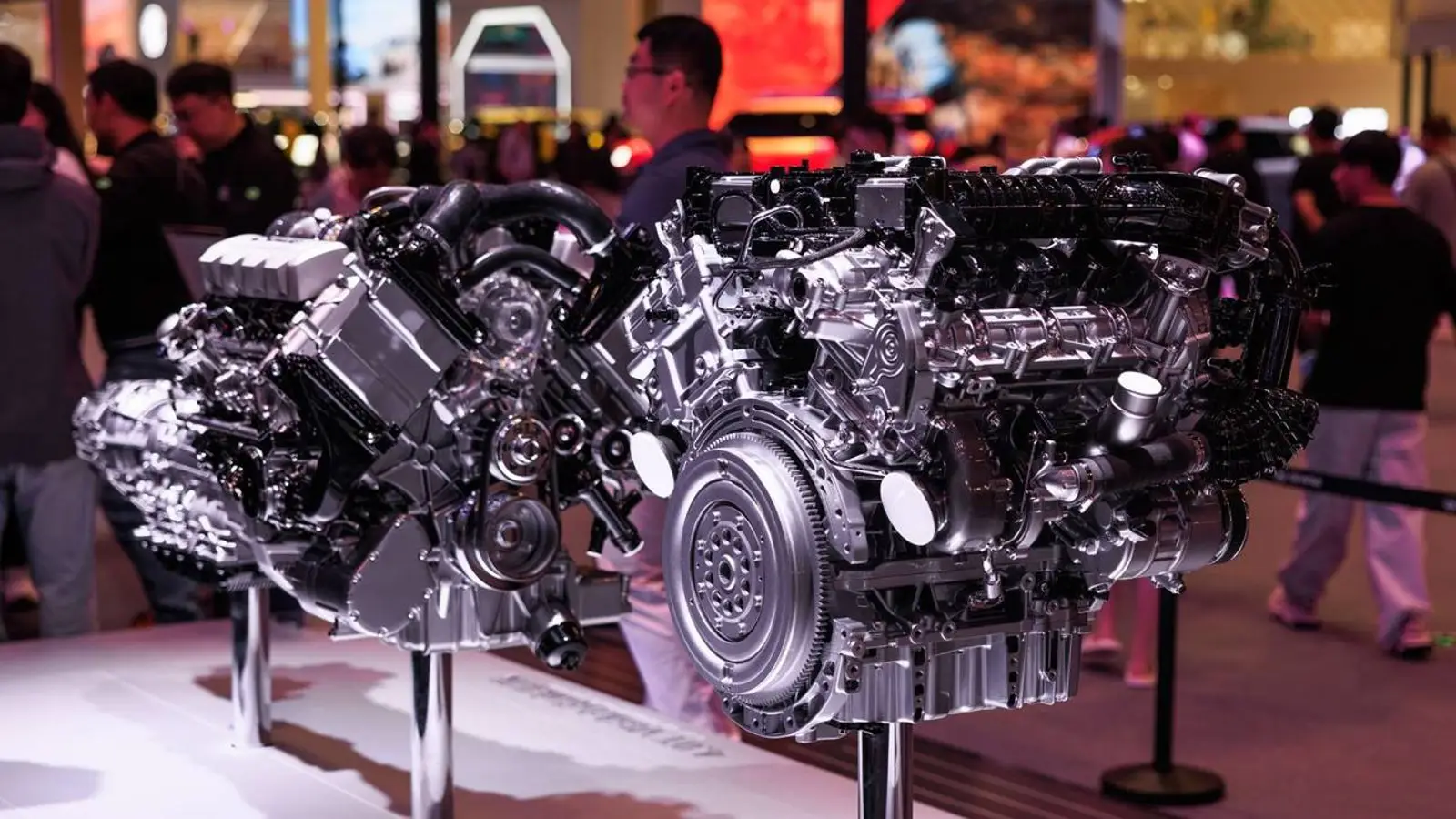
The greatest engines in history aren’t always the most powerful or the most expensive. Autocar has rounded up 50 road car engines where a mass-market motor for millions of cars can sit right next to a rare V12 that buyers almost treated as a piece of art.
The criterion behind the selection is a solid one: an engine has to either be built in huge numbers and genuinely reshape the market, or stir strong emotions — ideally both. That’s why a list like this can’t be read as a simple horsepower ranking. The greatness of an engine is built from its durability, its sound, its torque, its serviceability, the impact it had on the brand and how cohesive the car around it turned out to be.
The line-up opens with the 1932 Ford Flathead V8 — a simple, tough, mass-produced engine that made V8 power available beyond wealthy buyers. Then come the Volkswagen flat-four from the Beetle and the Transporter, the Ferrari Colombo V12, the Citroen flat-twin from the 2CV, the Jaguar XK, the BMC A-Series and the Chevrolet small-block V8. Those names alone make the point: greatness can belong to a people’s car engine or to a sports car powerplant.
The middle of the list reads almost like a textbook on how the combustion engine shaped brands. Ferrari’s Dino V6, the Rolls-Royce V8, the Ford Windsor small-block, the Lotus twin-cam, the Lamborghini V12, the air-cooled Porsche flat-six, the AMC/Jeep straight-six, the Chrysler Hemi, the Fiat twin-cam, the Rover V8, the Aston Martin V8, the Jaguar V12, the Audi inline-five, the BMW M88 and the Alfa Romeo Busso V6. Each had its own role: some won on durability, others on sound, others on the race track, and others by turning an ordinary car into an object of desire.
A separate strand covers engines that enthusiasts and tuners hold particularly dear. The Toyota 4A-GE from the AE86 and the MR2, the Ford/Cosworth YB, the Mitsubishi 4G63, the Honda B-Series with VTEC, the Subaru EJ flat-four, the Nissan SR20DET, the Nissan RB26 and the Toyota 2JZ-GTE. The last two have become close to mythology: the RB26 made the Skyline GT-R a legend, while the 2JZ-GTE from the Supra A80 is prized for its ability to hold huge power without ever feeling like it’s about to come apart.
Autocar then moves on to more modern and more complex engines: the BMW V12 from the McLaren F1, the Mercedes OM606, the BMW 530d inline-six diesel, the AMG V12 for Pagani, the Honda F20C from the S2000, the GM LS6, the Volkswagen W12, the Volkswagen V10 TDI, the Honda i-CTDi, the Mazda Renesis, the VW Group 3.0 TDI, the BMW S85 V10, the Bugatti W16, the Audi V12 TDI, the naturally aspirated V8 from the Audi RS4, the Fiat TwinAir, the Ford 1.0 EcoBoost, the Ferrari F154 twin-turbo V8 and the current 4.0-litre Mercedes-AMG V8.
The whole point of the selection is the contrast. The Ford 1.0 EcoBoost sits next to the Bugatti W16 not because they’re equal on emotion or on price. One showed how far you can push a small turbo engine in mass-market cars; the other became an act of engineering madness with 16 cylinders and four turbochargers. The BMC A-Series matters to millions of Mini owners, the BMW S85 V10 matters to those willing to put up with the fuel bills and the expensive servicing for the sound and the revs.
For enthusiasts, a list like this reads in a very practical way. The cult around a particular engine is rarely born out of museum value — far more often it comes out of survivability. The Toyota 2JZ, the Honda B-Series, the Mitsubishi 4G63, the Mercedes OM606, the old BMW inline-sixes, the Rover V8 and the GM LS family are loved for their serviceability, their reserves of strength and the fact that the tuning path for them is well understood. The flip side is just as clear: the rarer the engine, the more expensive the parts, the diagnostics and finding a mechanic who actually knows what they’re doing.
EVs are already faster than many cars on this list, but they don’t replace one thing — the individuality of a mechanical engine. A great combustion engine has a voice, a character, weaknesses and a story. That’s why a great engine sometimes outlives the body it sat in, the brand that built it and even the era it was born into.
This English edition was prepared using AI translation under editorial oversight by SpeedMe. The original reporting is by Polina Kotikova
Latest Stories