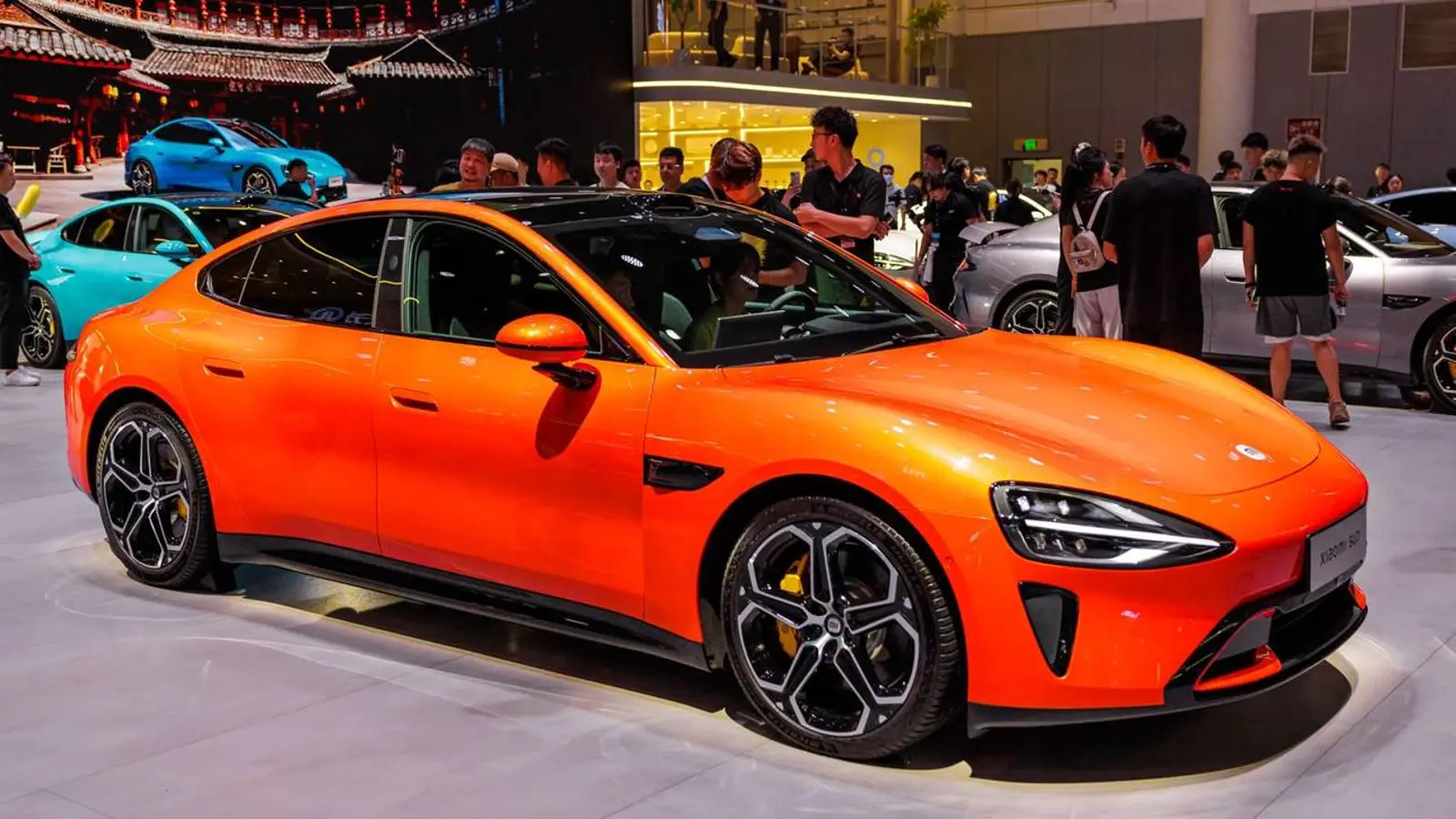
An Early Xiaomi SU7 in Europe Sounds Great — Until You Ask Who Covers the Warranty
 © A.Krivonosov
Autohelden plans to sell Xiaomi SU7 in Germany before Xiaomi's official European launch. The deal looks tempting, but service, warranty and software questions change the math.
Author: Polina Kotikova
The Xiaomi SU7 is once again at the center of a European debate: Germany's Autohelden wants to import and sell the Chinese electric sedan before Xiaomi's official EU launch. For buyers, the offer sounds tempting, but the real question is not acceleration or driving range — it is who stands behind the car after it is sold.
According to German automotive media, Autohelden plans to offer the SU7 and other Chinese models through a European network, leaning on existing parts and service partners. The ambitions are loud: tens of thousands of cars in the first year and up to 100 outlets across Germany. But Xiaomi has not officially launched the SU7 in Europe, which means this remains a third-party import scheme rather than a full dealer rollout by the brand.
For the driver, that distinction matters. An official launch means a factory warranty, European type approval, clear access to updates, diagnostics, recall campaigns and spare parts. An independent import can deliver the car sooner, but warranty obligations effectively shift to the seller. If a dispute arises over the battery, power electronics, ADAS or bodywork, the buyer will be dealing not with Xiaomi as a European manufacturer, but with whoever brought the car in.
There are technical nuances too. Chinese-market SU7s may need adapters for European charging, plus quirks in software, navigation, voice services and over-the-air updates. Even if the car can be registered, that does not turn it into a European-spec model. For an EV, this gap matters more than for a regular combustion model: the battery, charging, telematics and software functions account for half of the car's value.
The SU7 itself looks like a dangerous rival to the Tesla Model S, the Porsche Taycan and premium Chinese EVs. In China, it took off thanks to a mix of price, power, design and Xiaomi's strong digital ecosystem. In Europe, that advantage shrinks quickly once shipping, duties, importer markup, complicated service and an uncertain warranty are added to the Chinese sticker price. The car may still impress, but the deal becomes far less straightforward.
Against this backdrop, it makes more sense to wait for Xiaomi's official European launch, which the manufacturer itself has scheduled for 2027. Then the brand will have to handle certification, dealers, charging standards, warranties and software localization on its own terms. Buying through an importer is an option for enthusiasts willing to pay for early access and accept the risks that come with it.
This English edition was prepared using AI translation under editorial oversight by SpeedMe. The original reporting is by Polina Kotikova
Latest Stories