An American Murano walks into Tokyo — and Nissan warns about the paintwork
 © A. Krivonosov
Nissan offers the American Murano to Japanese buyers as an import — left-hand drive, US spec, and an unusual warning about paint and panel gaps.
Author: Polina Kotikova
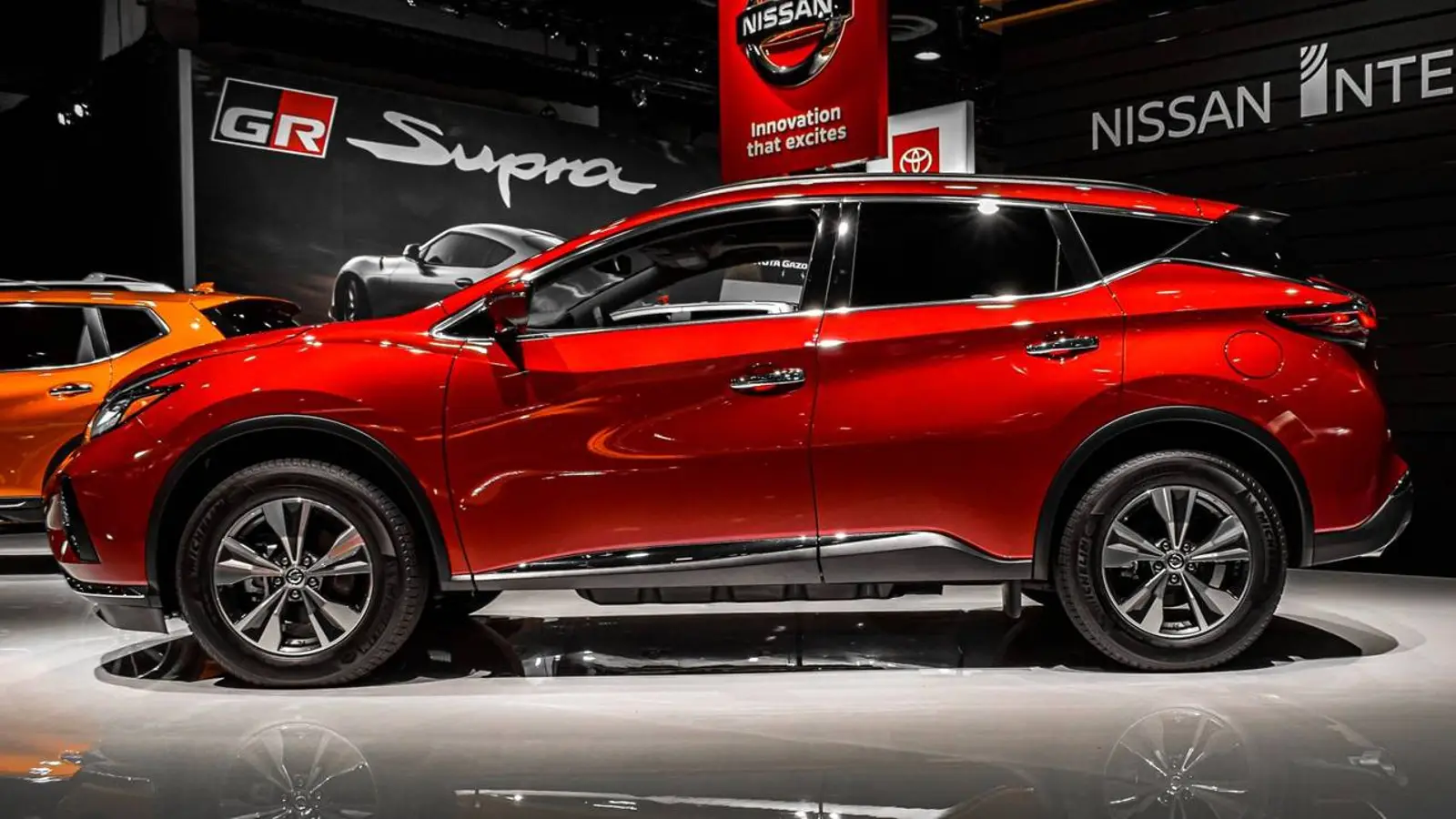
Nissan is bringing the Murano back to the Japanese market in an unusual format. This is not a local version, nor a right-hand-drive adaptation — it is a US import, built at Nissan’s plant in Smyrna, Tennessee. In Japan it is priced from 9,514,800 to 10,411,200 yen, or roughly $59,000–64,600 at current exchange rates.
The price is not the only twist. On the Japanese Murano page, Nissan openly explains that the car was produced for the United States and remains partly North American in specification. Buyers are asked upfront to read a separate set of notes: the car is left-hand drive, the light and wiper stalks are reversed, the mirrors fold manually, the instrument cluster and infotainment do not display Japanese menus, and there is no NissanConnect, no SOS-call, and no Japanese-tuned AM/FM radio.
The most unusual part is a warning about build quality. Nissan writes that the car has «overseas-market finish» that differs from Japanese domestic standards. The cited examples include small inclusions in the paint, traces of sealant, panel mismatches, misalignments and uneven gaps. The company adds that none of this affects function or performance.
Technically the Murano looks like a strong proposition for anyone who wants a large, rare Nissan. It uses a 2.0-litre VC-Turbo making 245 hp and 352 Nm, paired with a 9-speed automatic and all-wheel drive. By size, this is already a big SUV: 4,900 mm long, 1,980 mm wide with mirrors folded, 1,725 mm tall and 2,365 kg in gross weight. For Japanese streets and parking lots, that width alone will filter the buyer pool.
Nissan appears to be using a new Japanese certification path for US-built cars to plug the premium crossover gap without engineering a local Murano. For a company trimming its budgets and reshaping its line-up, that is cheaper than developing a dedicated Japanese version.
Nissan is being honest: it is not pretending the American Murano is a Japanese product. But that very honesty makes the launch both interesting and risky.
This English edition was prepared using AI translation under editorial oversight by SpeedMe. The original reporting is by Polina Kotikova
Latest Stories